Sep 15, 2026Business Solutions
Tooling an Unannounced Phone: How Tolerance Gets Locked
A mold cut before a phone ships lives or dies by tolerance. How iFunSmart locks an unannounced phone's dimensions in five stages, and the evidence to ask for.
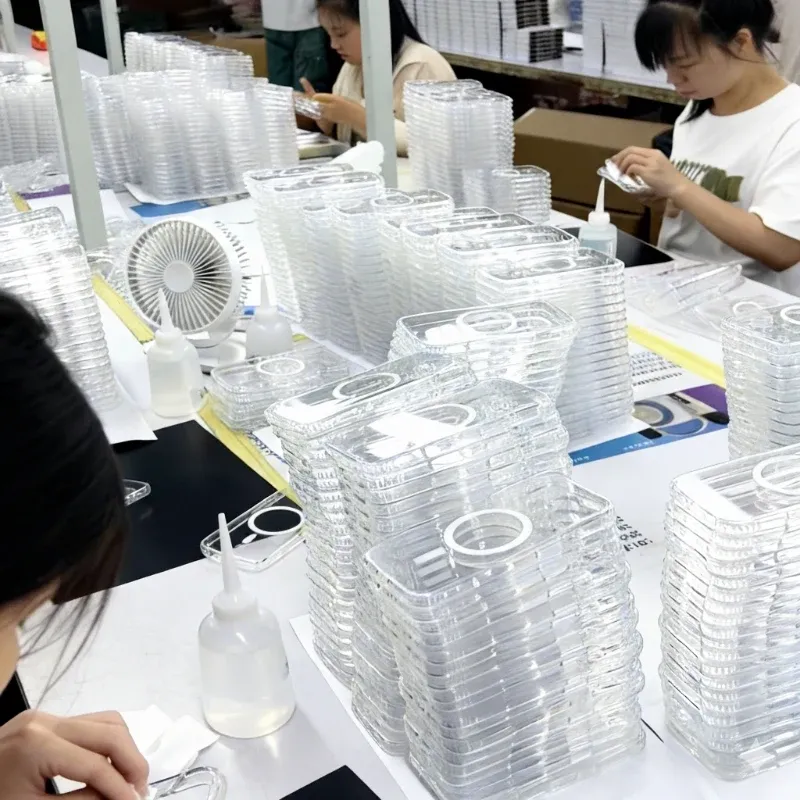
iFunSmart cuts a case mold against data, not against a device, so the question for a buyer is how the numbers got locked before a phone ships. Tolerance, the allowed gap between a mold's dimensions and a device's real dimensions, is the number the whole process exists to control. Here is how, stage by stage.
Last updated: September 15, 2026.
What "Tolerance" Means on a Phone Case
Tolerance is the allowed deviation between a mold's cut dimensions and a device's real dimensions. It is a bounded range the finished part must land inside, not a hope that the numbers happened to be right. The word gets thrown around loosely, so it is worth pinning down before any supplier conversation.
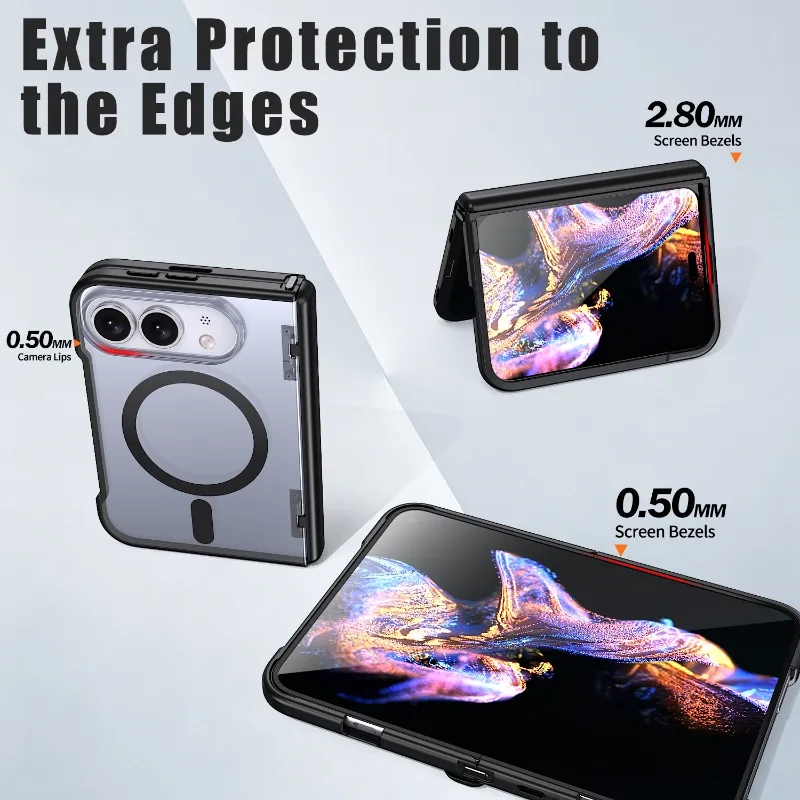
On a slab phone the tolerance stack is short. Wall thickness, port cutouts, button positions, and the camera opening each carry a band, and the case fits when every band holds. On a foldable such as the iPhone Duo the stack gains two members: hinge clearance, which must stay open through a moving angle, and closed-profile height, where two case halves meet two device halves. That is why a foldable is the harder case to tool blind, and why our hinge-protection case for the iPhone Duo is built around that extra stack.
Where the Numbers Come From Before a Device Exists
Every number in a pre-launch mold traces to one of three sources, and each source carries a different confidence level. Supply-chain reference data, gathered at 1:1 through the accessory ecosystem ahead of a launch, is the backbone. Physical reference units, the dummy phones and early builds that circulate in the accessory chain, settle arguments a render cannot. Published specifications arrive after an announcement, when the manufacturer's own numbers finally land and every earlier figure gets checked against them.
No single source is trusted alone. A single measurement is a claim; agreement across sources is a number we will cut steel against.
The Five Stages That Lock a Dimension
Our process runs in five stages, and each one exists to catch a different way of being wrong.
The first stage is data consolidation. Every available reference for a model is gathered, compared source against source, and disagreements are resolved before any drawing starts. Where sources disagree beyond a set margin, that dimension is flagged unstable and the design carries extra clearance around it.
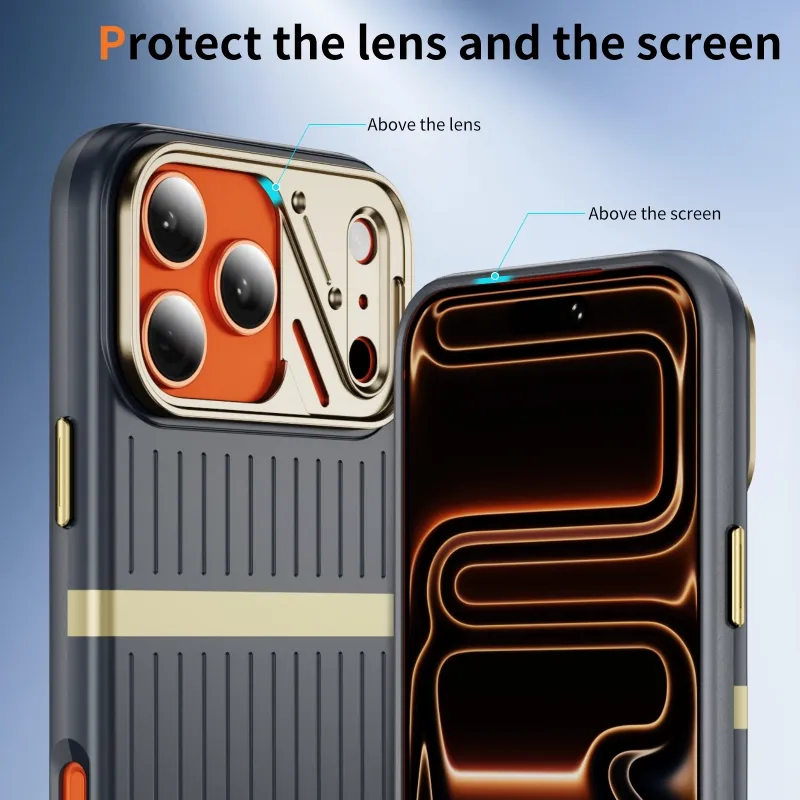
The second stage is steel with margins. The mold is cut to the consolidated numbers, but the high-risk areas, camera islands and hinge zones, are cut with designed-in adjustment room rather than at the bare dimension. A metal camera frame case for the iPhone 18 Pro Max is the visible result of that caution on a model where the camera island is the risk.
The third stage is the T0 sample. The first parts off the mold are measured, not admired. Wall thickness, cutouts, and closed profile go against the drawing, and anything out of band sends the mold back before a single production case exists.
The fourth stage is reference-unit fitting. Every physical reference we can obtain gets a case fitted onto it, because a sample that measures right but fits wrong is still wrong.
The fifth stage is the retail-unit check, and it is the only stage that ends the process. When the real phone ships, the case is fitted to it, and cutouts that no pre-release source could fully confirm are confirmed or corrected on first production units before anything leaves the factory.
What a Buyer Should Ask to See
The process is worth something only if you can inspect it. Ask for a sample you can fit yourself, the T0 measurement sheet, and a written description of the five stages for your model. A factory that produces evidence is different in kind from one that produces confidence.
There is a boundary to state plainly. Samsung has not announced the Galaxy S27 line, so we describe our tooling process, not the phone's specifications. We do not write screen size, weight, or price for a device that has not shipped, and a supplier who does is telling you a number no one can verify yet.
Common Questions From Buyers
What is a T0 sample?
A T0 sample is the first physical part off a new mold, before any production polish. It exists to be measured and tested, not to be sold. We use it to check fit, gate placement, flash, and sink marks before the mold is committed to a full run.
How accurate can a pre-launch mold be?
Accurate enough to produce, with named exceptions. Chassis dimensions that agree across sources hold well. Camera islands and hinge zones carry the most uncertainty before a retail unit exists, which is why those areas are cut with adjustment margins and confirmed on first production units. Any supplier claiming zero-deviation pre-launch accuracy is describing a process they do not run.
What happens if the real phone differs from the data?
The retail-unit check exists for exactly that. If a retail unit differs, the cutout is corrected on the mold and the first production units are re-verified before shipment. The correction is a rework, not a rebuild, because the margins were designed in at the steel stage.
What This Means for Your Order
Early orders and late orders are not the same product. A buyer who commits before launch is buying from a mold that has passed stages one through four and is scheduled for stage five. A buyer who orders after launch is buying from a mold where stage five already happened. Both are legitimate purchases, but the first carries a verification window and the second does not, and a supplier should say which one you are buying.
That is also the honest way to read a fit guarantee. If a case we manufactured does not fit the model and version you confirmed in writing, our fit terms let you report it within a set window with the batch or order number and photos, and we replace where the deviation is confirmed as ours. The terms exclude buyer rework, wrong installation, and reports filed after the window. The guarantee stands on the five stages producing evidence, not on a slogan.
What to Do Next
We run this process across more than 1,000 original designs, and it is the reason we could open orders for the current generation ahead of its announcement. The same process is running now for models that have not shipped, including our fold-magnetic hinge-protection case for the iPhone Duo.
Tell us which models you are planning for, including ones not yet on sale, and we will tell you where each mold sits in the five stages and what evidence we can put in your hands.
Send us your model list and we will confirm each mold's stage and the verification evidence you can inspect.
Apple, iPhone, Samsung, and Galaxy are trademarks of their respective owners. iFunSmart is an independent manufacturer of phone cases and accessories, not affiliated with, authorized, sponsored, or endorsed by Apple or Samsung. Product names are used solely to indicate compatibility.