Sep 15, 2026Industry Insights
Phone Case Materials by Price Band: TPU, PC, Hybrid
Yellowing and cracked backs are material problems, not luck. How to match TPU, hybrid, and matte constructions to the price band you sell in.
iFunSmart builds wholesale case lines in three material bands: clear or anti-yellowing TPU at entry level, a hybrid of PC and TPU in the middle, and matte or specialty constructions at the top. Match the material to the band you sell in, and the two most common returns — yellowing and cracked backs — mostly disappear.
Last updated: September 15, 2026.
What TPU, PC, and a Hybrid Case Actually Are
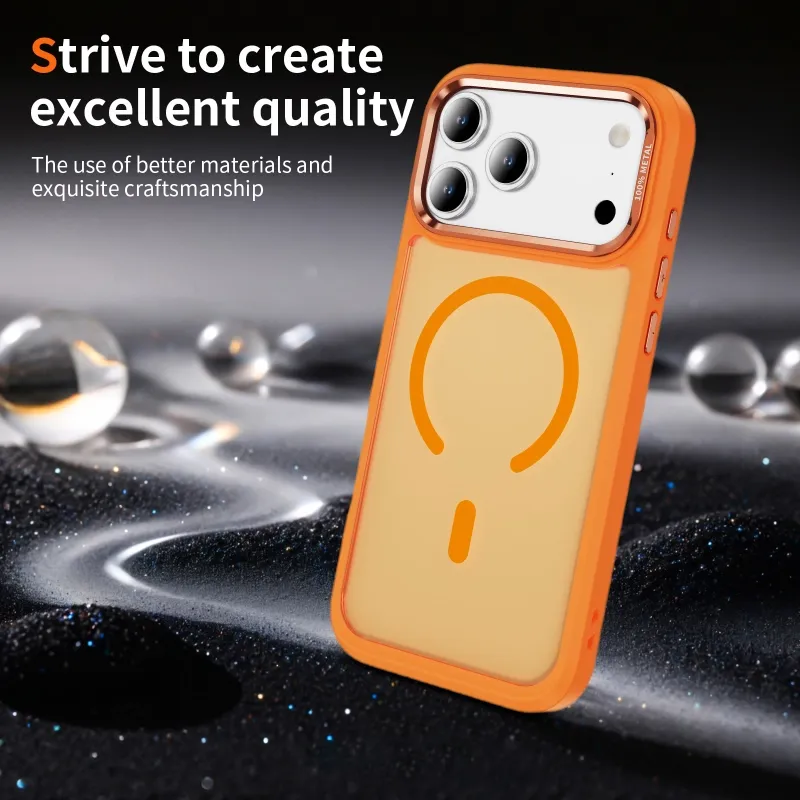
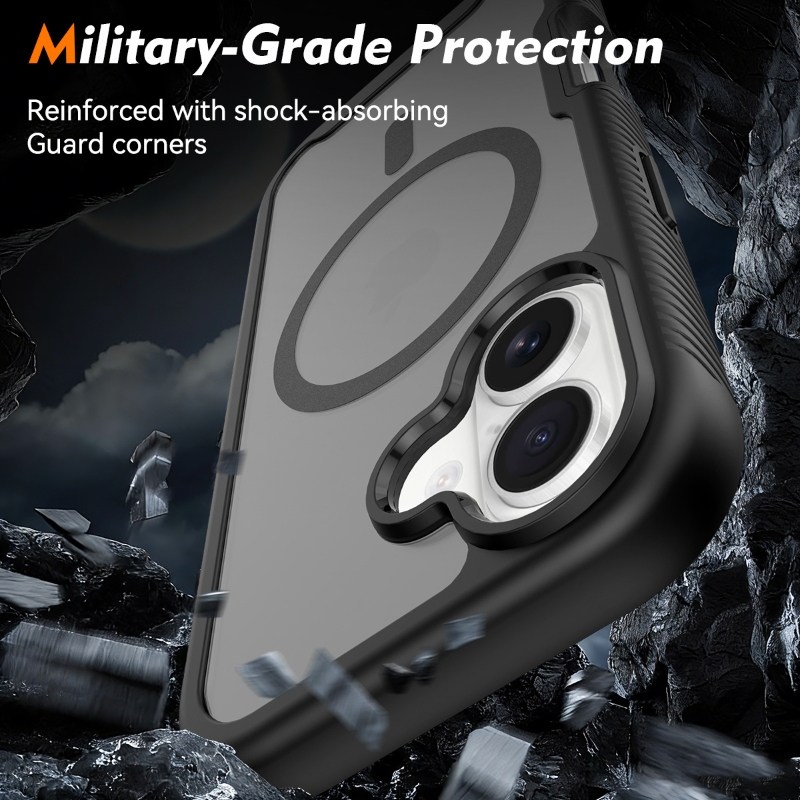
TPU, PC, and hybrid constructions cover most of the wholesale phone case market, including every MagSafe line iFunSmart ships. TPU, or thermoplastic polyurethane, is the soft, flexible material that takes the shock of a drop. PC, or polycarbonate, is the rigid, hard material that holds a shape and stays optically clear. A hybrid case is a rigid polycarbonate back bonded to a flexible TPU bumper, so the back resists scratches while the edge absorbs impact.
No single one of the three is the right material in the abstract. Each one buys a different property, and the property a buyer needs is set by the price band the case will be sold in, not by the material's reputation. A materials conversation that starts with a band and a market ends faster, and with fewer wrong samples, than one that starts with a factory catalog.
Why Clear TPU Yellows and What Anti-Yellowing Buys
Clear TPU is the entry material for iPhone and Galaxy cases, and yellowing is its known weakness. Left in sunlight, on a hot dashboard, or in daily contact with skin oils, ordinary clear TPU drifts toward yellow over months of use. The buyer did nothing wrong and the case still looks old, which is how a cheap clear case turns into a bad review and a refund.
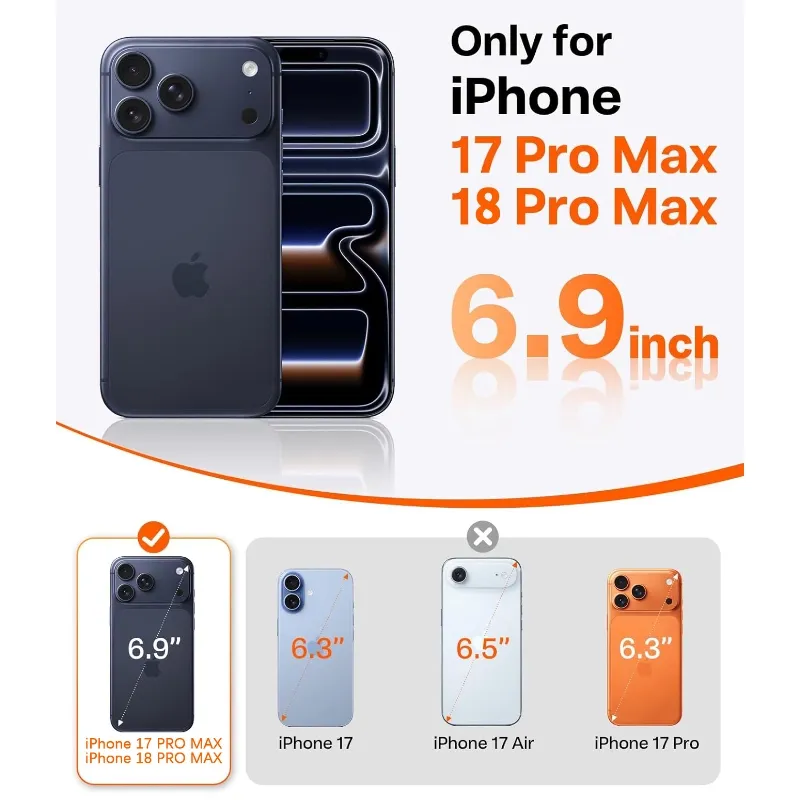
Anti-yellowing TPU attacks that failure directly. The material is formulated to resist the reaction that turns it yellow, so a clear case stays clear for longer in the same conditions that yellow an ordinary one. iFunSmart runs an anti-yellowing Bayer line for exactly this reason, and our Bayer anti-yellowing hybrid case for iPhone 17 Pro Max pairs that material with a hybrid structure. Our 3D color bar clear anti-yellow case is the entry-band version of the same idea.
One boundary belongs here. We do not publish laboratory aging numbers in this article, and we would rather say so than quote a figure nobody can check. When a supplier claims an anti-yellowing grade, ask what the grade is and what document stands behind it.
Matching Material to the Band You Sell In
At iFunSmart, the band a case is sold in decides the material more often than material fashion does, because each band fails in a different way.
The entry band sells on price and volume, and clear TPU is its natural material: it is cheap to mold, it takes color well, and it shows the phone through. Its failure mode is yellowing, so the entry-band question is not "clear TPU or something else" but "ordinary TPU or anti-yellowing TPU." Paying for the anti-yellowing grade at entry is often the difference between a repeat order and a returns pile.
The mid band sells on structure, and the hybrid is its workhorse. A PC back carries a printed pattern, a magnetic ring, or a kickstand without flexing, while the TPU edge does the drop work. One U.S. private-label buyer asked us for PC and TPU construction with a matte anti-fingerprint finish as the base specification for a new line, and that combination is what we would suggest as a starting point for most mid-band private-label projects. The Bayer hybrid linked above shows how the two materials divide the work in one product: the PC back carries the magnetic ring and the finish, the TPU edge takes the drop.
The top band sells on finish and feel, where the material underneath is expected and the surface is the product. Matte frosted TPU, smoke-tinted builds, metal buttons, and lens hardware live here. One honest boundary: our live catalog does not list an aramid case today, so we treat aramid as a material buyers ask about rather than one we currently quote. Buyers in this band are usually paying for a finish that survives a pocket, not for a material name.
Where Finishes Fit: Clear, Matte, and Smoke
Inside any band, the finish changes how a case feels in the hand as much as the material underneath it.
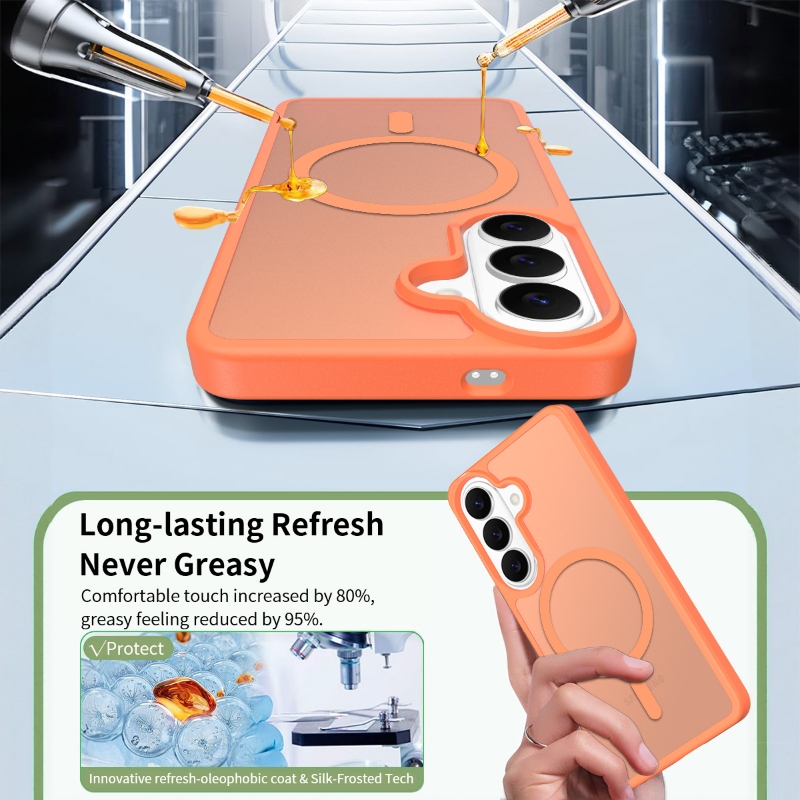
Matte finishes scatter fingerprints and light scratches instead of showing them, which is why they dominate the mid and top bands. The same U.S. buyer's checklist put a matte anti-fingerprint surface next to the material choice, and our smoke matte anti-fingerprint case is that pairing in production. Clear finishes show off the phone's own color, which sells well wherever phone color is part of the purchase decision, but a clear finish must sit on an anti-yellowing grade or the reviews will catch up with it. Smoke finishes sit between the two: part of the phone's color shows through, while smudges and pocket wear mostly hide.
The practical way to choose is to work backward from the buyer's task. A case bought to protect a phone that lives in a work bag can be matte and thick. A case bought to dress up a new phone for the weekend has to be clear or smoke, and then the anti-yellowing grade stops being optional.
Common Questions From Buyers
Which material should a first order start with?
For a first order in an untested market, start with a hybrid in the mid band and add one clear anti-yellowing entry SKU beside it. The hybrid covers buyers who care about protection, the clear SKU covers buyers who care about looks, and neither one depends on a finish trend. That is a spread you can judge from one shipment instead of guessing across five finishes.
Does anti-yellowing material cost more than ordinary TPU?
Yes, and the premium is the point. Anti-yellowing grades and named-brand materials carry a real cost increase over commodity TPU, which is why entry lines sometimes skip them. The honest way to decide is to compare that cost against what one yellowed-case return costs you in refund, return freight, and review damage, then pick the grade the arithmetic supports. We quote both grades so the comparison is yours to make.
How do I verify a material claim before bulk?
Ask for the material composition on the spec sheet, not in a chat message, and ask for it to be written into your confirmation. Then order a sample and put the case through the conditions you actually expect: pocket, dashboard, a week of handling. A factory that names its material and ships a sample for hold testing is different in kind from one that sends renders and adjectives.
What to Do Next
Material choice is a band decision before it is a chemistry decision. Entry bands need anti-yellowing grades more than they need exotic names, mid bands need a hybrid structure with the finish chosen deliberately, and top bands live or die on surface quality.
Tell us which band you are stocking and the models you need it for. We will confirm which materials and finishes we run for those models and send samples so you can judge the material in your own hand.
Tell us your price band and models, and we will confirm the material options and send samples for hold testing.
Apple, iPhone, and Galaxy are trademarks of Apple Inc. and Samsung Electronics Co., Ltd. respectively. iFunSmart is an independent manufacturer of phone cases and accessories, not affiliated with, authorized, sponsored, or endorsed by either company. Product names are used solely to indicate compatibility.