Oct 8, 2026Business Solutions
Where First Sell-Through Data Comes From
The reorder decision needs numbers, and those numbers come from somewhere. Where to read first sell-through data after a launch order lands on shelves.
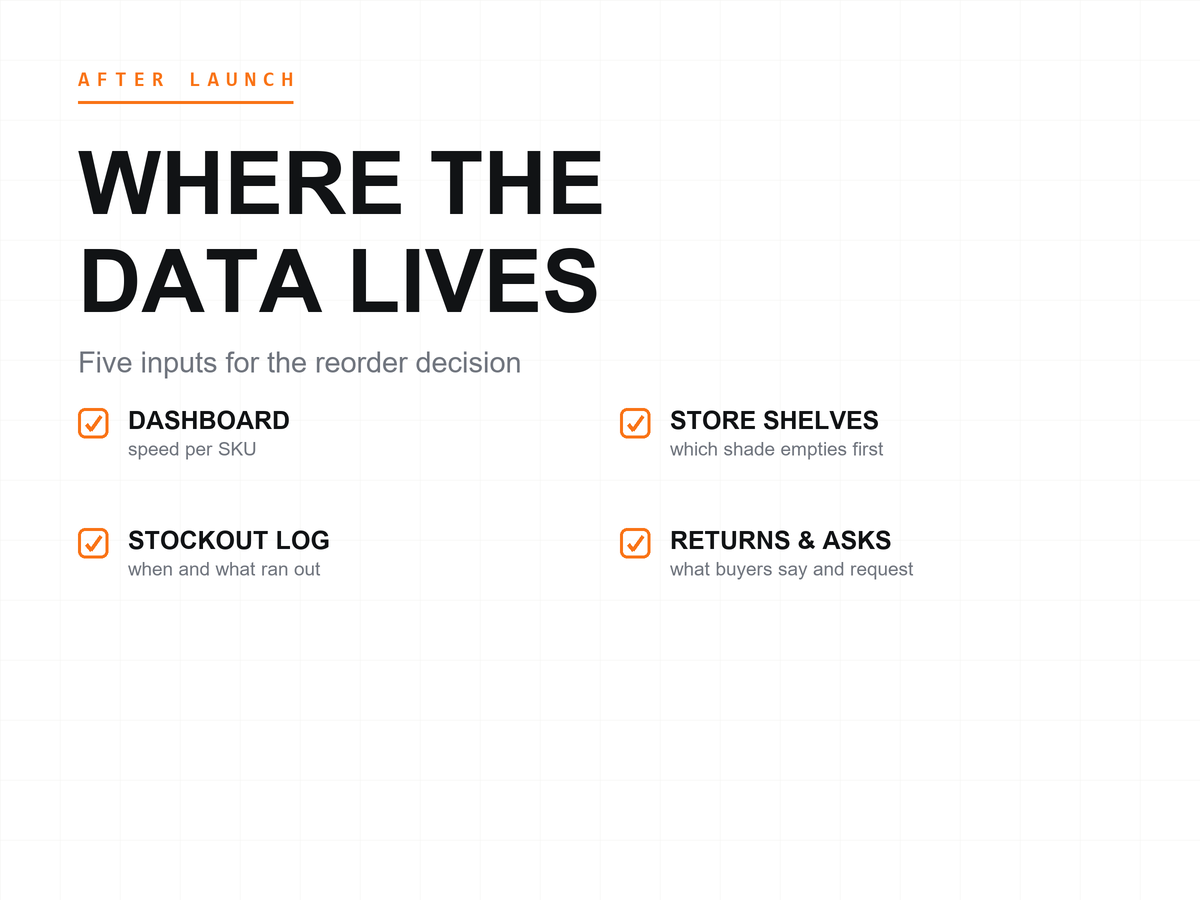
A launch order answers a demand you guessed at. The reorder should answer a demand you measured. First sell-through data — where it lives and how to read it — is what turns the second order from another guess into a decision, and iFunSmart sees none of it: you hold every input.
Last updated: October 8, 2026.
Sell-Through, Read Per SKU and Not as a Pile
Sell-through is the share of the units you received that has actually sold within a period, counted for one model in one color on one channel at a time. That definition carries the discipline with it: read as a single pile, the number stops describing anything you can reorder. Totals hide the story; splits tell it.
A pile also flatters the wrong SKU. Say a smoke case for the iPhone 18 Pro Max moved steadily while a plain black build sat still — blended together, the two report a middling average that matches neither. The reorder runs on the split, not on the average.
One scope note before the sources. Where the reading goes next — the trigger line that fires a reorder, or the choice between deepening a winner and widening the range — is decided in its own right. This article stays upstream of both, at the question of where the numbers come from.
The Dashboard and the Shop Floor
Start where the record keeps itself. Your marketplace dashboard reports units sold per listing over any window you set, and against those units it reports the views each listing collected. A listing that draws views but few sales is being seen and passed over; a listing that sells through almost no views is being searched out by name. Both readings matter, and both arrive per SKU without extra work.
Then go stand where your customers stand, if you run a shop. The wall keeps its own record: the shade that empties first, the model customers pick up and put back until the right one appears, the question a stranger asks before buying. A wall sells by sight, and the order in which hooks empty is a read on what the eye chose. Your memory of last Saturday is not a record; a note taken the same day is.
The Records That Arrive Without a Purchase
The stockout log may be the cheapest signal you own. A SKU that ran out did not stop selling — it stopped being available, and the moment it disappeared marks the point where demand outran your order. Note what ran out, not only that something did. A color gone while its model still sits on the shelf is a shade worth restocking; a whole model gone is a device your market wants covered. An empty hook is an answer arriving in the negative.
Returns and reviews speak in keywords, and the keywords sort themselves. Does not fit, wrong model, arrived for a different phone — those are fit and selection problems, and they correct the next order's model mix. Wanted another color, kept it anyway, a magnet question left in the comments — those are preference problems, and they say the model was right while something on top was not. The returns pile looks like failure; sorted by keyword, it reads like guidance.
The fifth source costs nothing and lives in your inbox. A customer who writes to ask whether the smoke one is back in stock has told you about demand that never reached a shopping cart. Unconverted, unmeasured by any dashboard, freely given — the inquiry file is the closest thing first-order data has to a scout.
Split the Reading Three Ways
Model, color, channel: three dimensions, one read each. The same SKU can behave differently in all three, which is exactly why the total misleads.
The model dimension asks whether the device underneath is circulating where you sell. Color asks whether the finish on top is carrying its weight. Channel is where the two met their buyers, because a shade can own the shop counter and stall on the listing page — a split the total hides.
Two builds from our range show how the dimensions sort the work. The smoke MagSafe case for the iPhone 18 Pro Max with a metal lens kickstand is a color SKU worth reading: its first-season data answers whether the smoke tone carries in your market, and a channel split says where it moved. The MagSafe case with detachable metal buttons is a model SKU on the watchlist: its data answers whether the iPhone 18 Pro Max itself is circulating with your buyers, and how that demand prefers to shop. Color data promotes a shade; model data promotes a device. The reorder should know which of the two it is acting on.
If you want to know which colors and builds we run for a model sitting on your watchlist, ask and we will name the finishes.
Common Questions From Buyers
Which source deserves the first read?
The one that already exists on the day you look. A dashboard needs no setup, a stockout note needs only a habit, and an inbox needs nothing at all. Buyers who run a shop and a listing side by side usually find that the wall and the inquiry file disagree with the dashboard first — and that disagreement is where a first season teaches you the most.
Does iFunSmart see any of this data?
We do not see your sell-through data. The dashboard, the wall, the stockout log, the returns file and the inbox all sit on your side of the transaction, which is why the reorder inputs stay in your hands. What sits on ours is the supply side: the mold library a reorder draws from, the finishes we run per model, and the labels we print and apply in-house when a restock needs relabeling.
Can a clean read promise the reorder sells?
No. Reading the data well narrows a guess; it does not retire it. Timing, weather, a rival's promotion and a dozen other forces sit outside every dashboard, and we do not promise sell-through for any model or color we make. What a clean read does is smaller and more useful: it aims your next order at demand you can point to, and it lands the cost of being wrong on a quantity you chose.
What to Do Next
The reorder inputs live with you; the supply side lives with us. We mold cases in Guangzhou, the library holds 1,000+ molds, and we ship to buyers in 30+ countries, so a SKU your data promotes can usually ride tooling that already exists instead of waiting on a new setup. Read the five sources, split the numbers three ways, and bring the conclusion to the factory.
When your first numbers point somewhere, send us the models and colors they name and we will match them to the molds we hold.
Apple and iPhone are trademarks of Apple Inc. iFunSmart is an independent manufacturer of phone cases and accessories and is not affiliated with, authorized, sponsored, or endorsed by Apple.