Sep 17, 2026Industry Insights
Foldable Case Design: iPhone Duo IP68 vs Galaxy Z Fold8
The iPhone Duo is rated IP68 and the Galaxy Z Fold8 IP48, but no case adds water resistance. Here is what foldable geometry means for your molds.
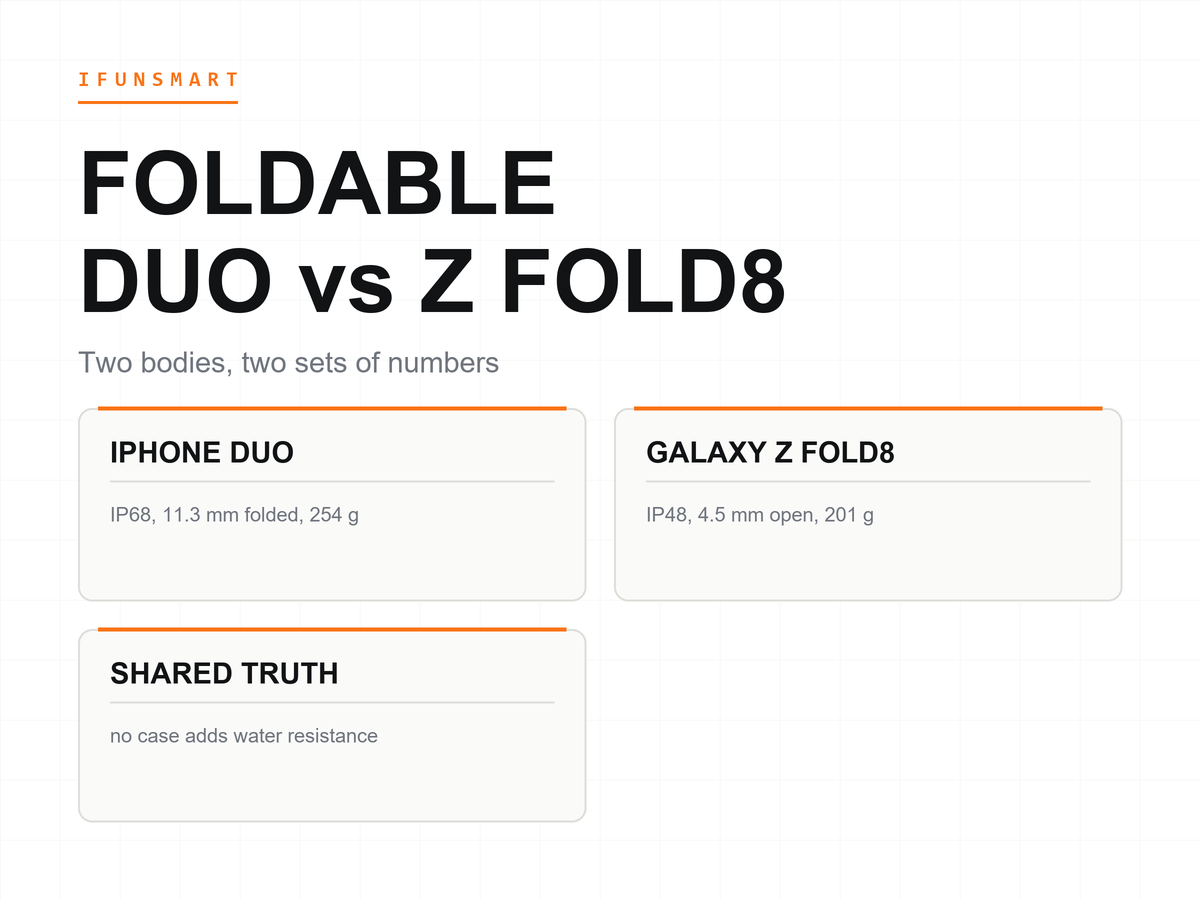
The two flagship foldables of this season carry different sealing standards, and that difference matters less for marketing than for case geometry. The iPhone Duo is rated IP68 for submersion up to 6 meters for 30 minutes. The Galaxy Z Fold8 carries an IP48 rating, tested at 1.5 meters of freshwater for up to 30 minutes. A case follows the body it protects, so your mold decisions follow the numbers, not the headlines.
Last updated: September 12, 2026.
Why a Folding Phone Changes the Case
A foldable is not a slab phone with a hinge sticker on it. Three things change at once: the body moves through a hinge, the two halves close against each other, and the displays need to stay clear on both faces.
Hinge clearance is the gap a case must leave around the rotating joint so the phone opens and closes without binding. That single number drives more of the mold than the camera cutout does on a slab phone. Leave too little and the hinge sticks; leave too much and debris enters the joint.
The second change is folded thickness. The iPhone Duo folds to 11.3 mm thick and opens to 5.2 mm, at 254 g, while the Galaxy Z Fold8 opens to 4.5 mm and weighs 201 g, according to each manufacturer's own spec pages. A folio or hinge-cover design has to close flush at the folded thickness of the specific device, and half a millimeter of error shows up as a case that will not shut.
The third change is cutout layout. A foldable carries cameras and buttons on both halves, so the case is really two linked parts that must align when the device closes. That alignment tolerance is what separates a designed foldable case from a slab mold that was stretched.
Two Flagships, Two Sets of Numbers
Apple and Samsung published their foldable specs this year, and the useful comparison for a case buyer is the physical one. Here is what each manufacturer states.
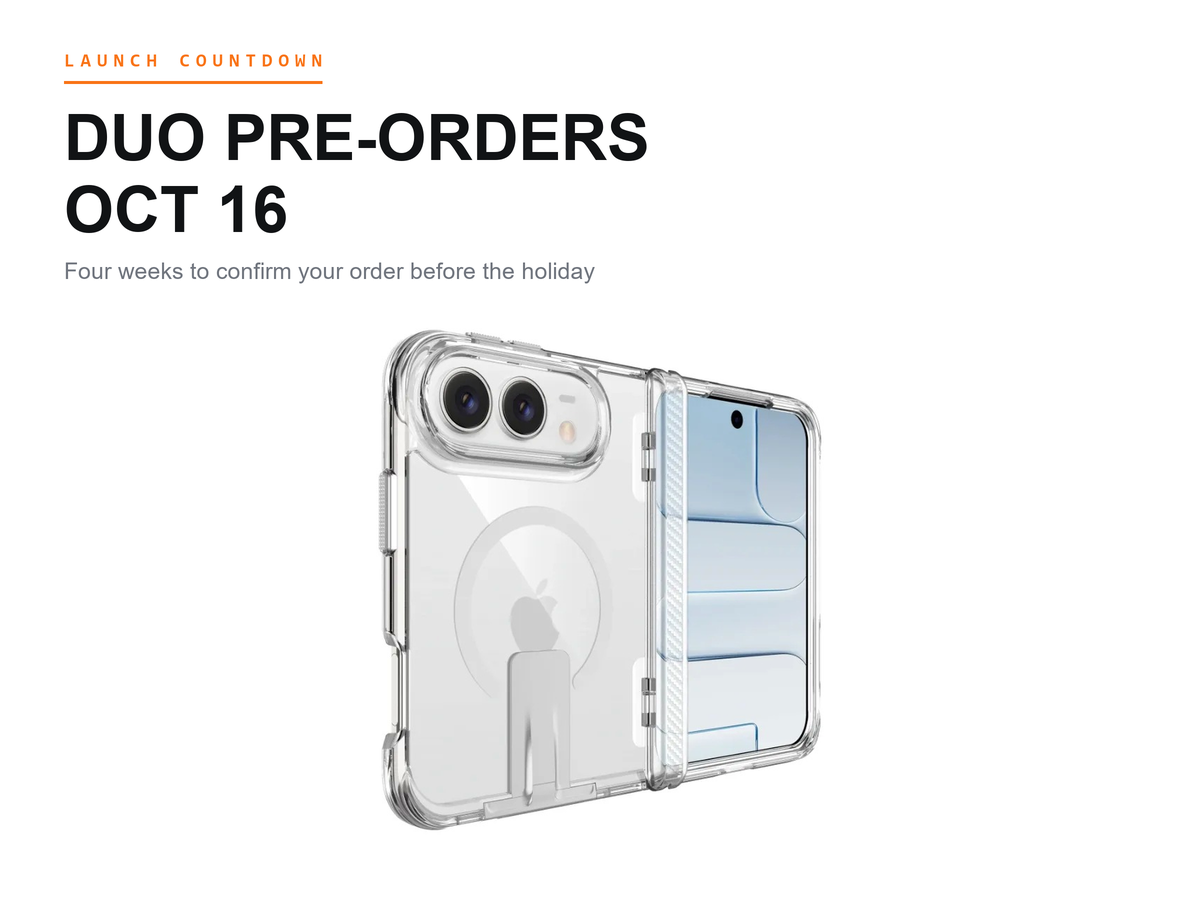
The iPhone Duo measures 117.8 mm by 84.1 mm by 11.3 mm folded and 117.8 mm by 164.6 mm by 5.2 mm unfolded, at 254 g, with a 7.6-inch inner display and a 5.4-inch outer display. Apple rates it IP68 under IEC standard 60529, at a maximum depth of 6 meters for up to 30 minutes. It goes on sale October 23, 2026, with pre-orders from October 16.
The Galaxy Z Fold8 opens to a 7.6-inch main display with a 5.5-inch cover screen, opens to 4.5 mm thick, and weighs 201 g, which Samsung describes as its lightest Fold yet. Its durability FAQ lists an IP48 rating, with a footnote citing lab conditions of submersion in up to 1.5 meters of freshwater for up to 30 minutes. It is already on sale.
Both ratings describe the device, not the case you will put on it. The gap between 6 meters and 1.5 meters is a manufacturer's engineering choice, and neither number transfers to any accessory.
What an IP Rating Does Not Mean for Your Case
Here is the honest boundary, and we would rather state it plainly: a case adds no ingress protection. A hinge cover moves through an opening every time the phone folds, so a foldable case has engineered gaps by definition. No case we make, and no case anyone makes, turns an IP48 or IP68 phone into a more water-resistant phone.
What a foldable case does instead is mechanical work. It cushions the halves when the device closes, keeps the hinge clear of debris that would grind the joint, and protects the outer surfaces that take the contact. Buyers sometimes ask whether a hinge cover improves water resistance. It does not, and a supplier who implies otherwise is overselling.
This is also why foldable cases are hard to copy cheaply. The hinge is a moving interface, and a mold that is slightly off shows up as a sticky open or a case that will not close flush, which end customers return.
How We Verify a Foldable Case Before Shipment
Our process for foldable tooling is staged, the same as our slab tooling but with one more check. We cut the mold from 1:1 device data, then run a T0 sample to check fit, gate placement, flash, and sink marks before committing the mold to a run.
The extra step on a foldable is the hinge pass. On sample units we open and close the fitted case to confirm the hinge moves freely at the full fold angle, that the halves close flush at the device's folded thickness, and that the display edges stay clear. If a final retail unit changes a hinge dimension, the cutout is re-verified on first production units before anything ships. We would rather hold a shipment a week than send a case that sticks.
Common Questions From Buyers
Should I stock foldable cases for both the Duo and the Z Fold8?
The two devices share a category, not a body. The Duo folds to 11.3 mm and the Z Fold8 opens to 4.5 mm, so one mold cannot serve both. If your market carries both phones, plan two SKUs and size each against its own install base.
Does a case affect the IP rating of a foldable?
No. Ingress protection is a property of the device as manufactured and tested. A foldable case has moving gaps by design and adds no water resistance. Any supplier claiming otherwise is overselling a mechanical product.
What should I check before ordering foldable cases?
Ask the supplier three things: how the hinge clearance was set, whether the folded-thickness tolerance was verified on a sample, and what happens if the final retail unit differs from the tooling data. The answers separate designed foldable tooling from adapted slab molds.
What to Do Next
We build foldable cases with hinge clearance set from 1:1 device data, in clear MagSafe-compatible and frosted finishes, with the fit verified on samples before a run ships. Our foldable range is in production now for the current device generation.
Tell us which foldable models you carry and in which markets, and we will send the hinge and fit specification sheet plus the verification steps we run before shipment.
Request the foldable spec sheet and we will confirm what we can tool and ship for your market.
If you are stocking the Duo, these are the foldable designs buyers ask for most: the mid-axis bracket MagSafe case for iPhone Duo and the spring hinge crystal clear case.
Apple, iPhone, and iPhone Duo are trademarks of Apple Inc. Samsung and Galaxy are trademarks of Samsung Electronics Co., Ltd. iFunSmart is an independent manufacturer and is not affiliated with, authorized, sponsored, or endorsed by Apple or Samsung. Product names are used solely to indicate compatibility with our products.