Sep 17, 2026Business Solutions
Q4 Phone Case Ordering: The Cutoff Calendar
Black Friday lands November 27 and Chinese New Year falls on February 6, 2027. Ocean freight takes weeks, so your real order dates are earlier.
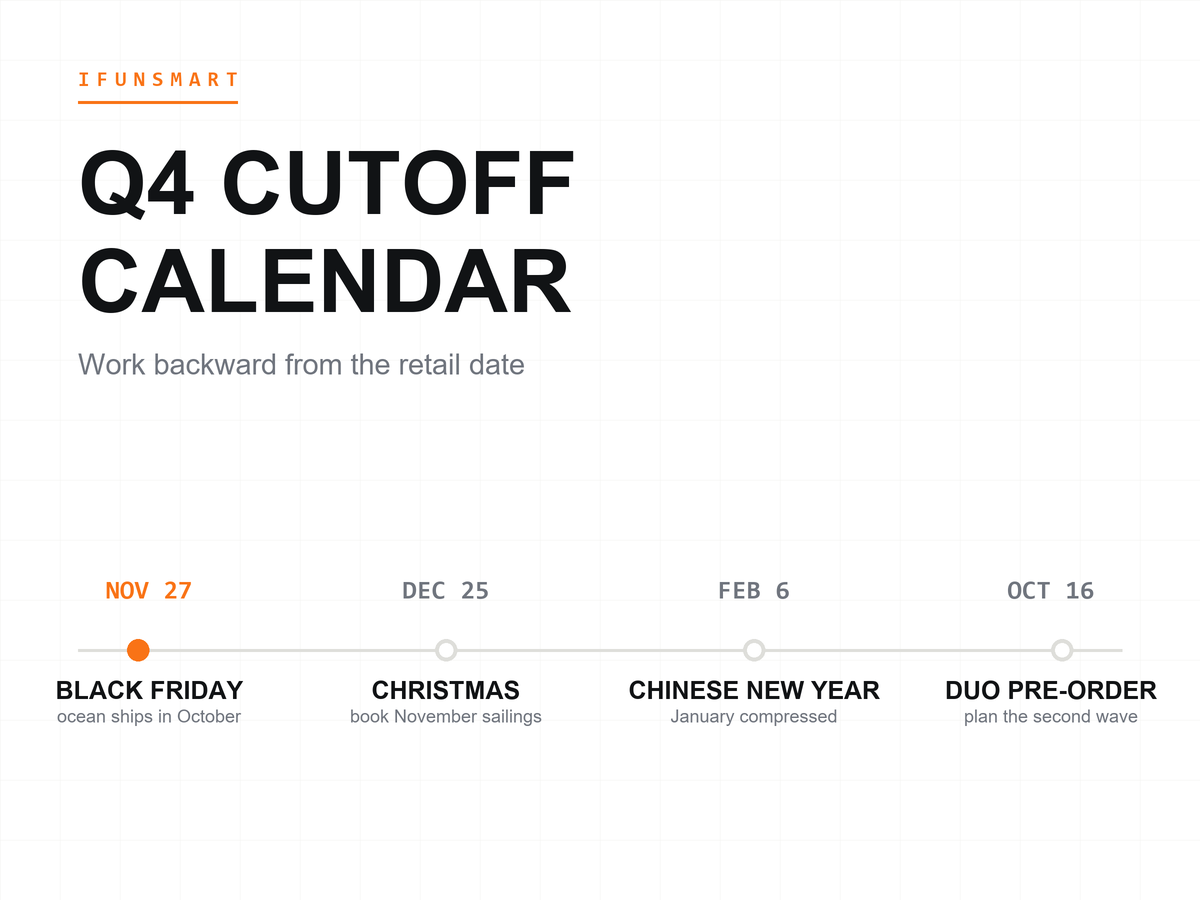
Your Q4 order calendar for iPhone 18 and Galaxy case stock is set by three dates you did not choose: Black Friday on November 27, Christmas on December 25, and Chinese New Year on February 6, 2027. Ocean freight from Guangzhou typically runs four to six weeks, so your real order dates fall weeks before the deadlines buyers plan around. Order at the retail deadline and you have missed it.
Last updated: September 12, 2026.
The Three Dates That Set Your Calendar
The Q4 season for a phone-case buyer is really three deadlines stacked on top of each other, and each one pulls your order date earlier.
The first is Black Friday, which falls on Friday, November 27, 2026, with Cyber Monday following on November 30. This is the peak sell-through window for accessories, and stock that lands after it serves the tail, not the peak.
The second is Christmas, Friday, December 25. Retail shelves and marketplace listings need to be full before the final gift-buying week, which pulls your landed-by date into mid-December.
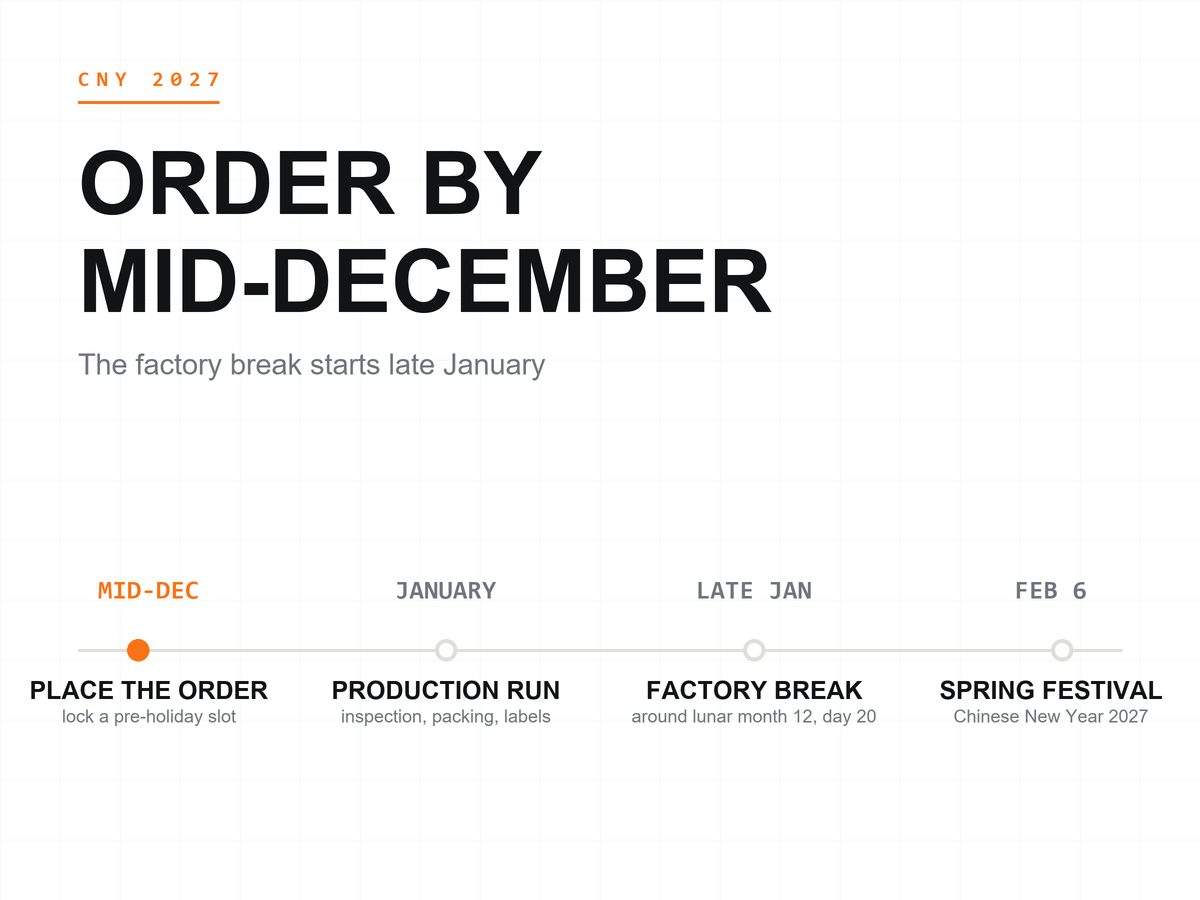
The third is the one buyers forget: Chinese New Year falls on Saturday, February 6, 2027. Factories across the manufacturing belt wind down in the days before the holiday and restart over the following weeks, so February capacity is compressed and January demand moves forward into a shorter window. The official 2027 public holiday schedule has not been published at the time of writing, so plan on the typical pattern rather than announced dates.
A cutoff date is the last day an order can be placed and still reach its market before a sales deadline, and it is set by transit time and factory load rather than by the deadline itself.
Working Backward From the Deadline
The arithmetic is simple once you fix the transit assumption, and it is worth doing before you talk to any supplier.
If ocean freight from Guangzhou to your market typically runs four to six weeks, then a container that must clear customs and be on shelves before Black Friday needs to leave China by early-to-mid October. Add production time ahead of that, and the order decision lands in late September — which is next week, not next month.
For Christmas, the same arithmetic pulls the ocean departure into early November. For anything that must land before the Chinese New Year wind-down in late January, the last ocean departures land in mid-to-late December, and after that you are planning for March delivery, not February.
These are planning ranges, not quotes. The exact transit on your lane depends on routing and season, so confirm it with your forwarder before locking dates. What the ranges do is show how early the real deadlines sit relative to the retail ones.
Where the Air-Freight Trap Sits
When an order slips past the ocean cutoff, the only rescue is air freight, and air is priced on chargeable weight. Phone cases are light and bulky, so the dimensional weight is usually the billed weight, and a bulky carton punishes air far more than ocean.
The efficient pattern for a late order is a split: air only the units that must arrive first to catch the peak, and send the balance by ocean to serve the plateau. We have written about how volume weight is calculated and how compact packing lowers it, because packing is one of the few freight costs a factory can genuinely influence.
The wrong pattern is converting the entire order to air in a panic. That is how a launch margin disappears into a fuel surcharge.
What the CNY Squeeze Does to January
The February 6 holiday does not just stop production for the holiday fortnight. It compresses January.
Every buyer who wants February stock orders before the shutdown, so January production slots fill earlier than the calendar suggests. A factory shutdown of two to four weeks is the industry norm across the holiday, and restart capacity in mid-February is contested by every buyer who under-ordered. If you have lived through a post-CNY restock scramble, you already know the second week of February is not when you want to be negotiating lead time.
The buyers who avoid the squeeze do two things: they place February stock orders in December with a pre-holiday production slot, and they keep a reorder trigger on their fast movers so the decision is already made when the window opens.
Common Questions From Buyers
When is my last order date for Black Friday stock?
If ocean transit on your lane runs four to six weeks, the ocean departure needs to happen by early-to-mid October, which means placing the order in late September. Confirm the actual transit with your forwarder, then work backward from your landed-by date.
What if I have already missed the ocean cutoff?
Split the shipment. Air freight only the quantity that must arrive to catch the peak, and move the balance by ocean. Air is billed on chargeable weight, so a bulk case order converted entirely to air is the expensive outcome; a targeted split is the survivable one.
How does Chinese New Year change my Q1 planning?
Chinese New Year falls on February 6, 2027. Plan for factory wind-down through late January, a shutdown window of two to four weeks, and contested restart capacity in mid-February. February stock should be ordered in December, and the official 2027 holiday schedule is not yet published, so build the typical pattern into your dates rather than announced ones.
What to Do Next
We produce through the Q4 season with molds already cut for the current device generation, and a reorder on an existing mold is a shorter cycle than a new tool. We can quote production slots and ship windows against your actual deadline, so your calendar decision is based on real dates rather than guesswork.
Tell us your destination market, the models and colors you need for Q4, and the date each batch must land by, and we will confirm the slots and the freight split that fits.
Send us your Q4 deadlines and we will confirm the last workable order dates for each batch.
Stocked models ship fastest, such as the clear MagSafe case for iPhone 18 Pro Max and the clear MagSafe hinge kickstand case for iPhone Duo.
Apple, iPhone, Samsung, and Galaxy are trademarks of their respective owners, used solely to indicate compatibility. iFunSmart is an independent manufacturer of phone cases and accessories.