Oct 9, 2026Business Solutions
Sample Revisions: What Turnaround Tells You
How a supplier handles a sample revision tells you more than the sample itself. What to send, what to watch, and what a fast, structured answer proves.

A sample revision is a test with two sides. The unit on your desk answers whether a design works; the round trip behind it answers whether the supplier can engineer. iFunSmart reads every revision round that way, because how a revision comes back tells you more than the sample itself.
Last updated: October 9, 2026.
Two Kinds of Revision, Two Natural Speeds
Every revision point falls into one of two groups, and the group decides the work behind it. Finish revisions change what the surface does: a color shifted warmer, a texture made quieter, a logo resized or lifted clear of the camera corner. The skeleton of the case stays as it is, and the correction happens on the outside the sample already has.
Structural revisions reach inward. A port cutout that grips a plug too tightly, a wall that crowds a button's travel, a clip that lets go early — these sit in the drawing, and the drawing drives the tool. Some structural points can be answered on the mold the sample came from. Others reach the steel itself, and re-opening tooling is a real possibility; a supplier who names that at the start is reading the structure, not dodging the work.
Those two groups do not move at the same pace, and the gap is information rather than an excuse. The sample answers the design. The turnaround answers the supplier.
What a Structured Revision Note Looks Like
A structured revision note is a written list in which every point sits on its own line, names its place on the case, and states what the corrected sample should do. Each part of that sentence blocks a known failure. One point per line keeps a message about several problems from collapsing into a single mood. A location turns the button feels wrong into something a toolroom can actually find. An expectation separates release with less force from hold no matter what, which are different cases wearing the same words.
Send the note as one round rather than a drip of messages. A supplier working from a single list can sort it in a single pass, and the answers come back sorted the same way, which makes the whole round easier to check later.
The note reads the same on any build. Written against a hinge build under revision, the points will sit mostly in structure: how the hinge cover clears the fold, where the cutouts land, how the shell closes over the frame. Written against a clear Duo sample, they will sit mostly in finish: the clarity of the back, the feel of the surface under a thumb, where a mark sits on the face. Either way the list gives the factory something it can answer line for line.
If a note is already drafted, send it across as it reads, and we will mark which points sit on the surface and which sit in the structure before the round starts.
What the Reply Tells You
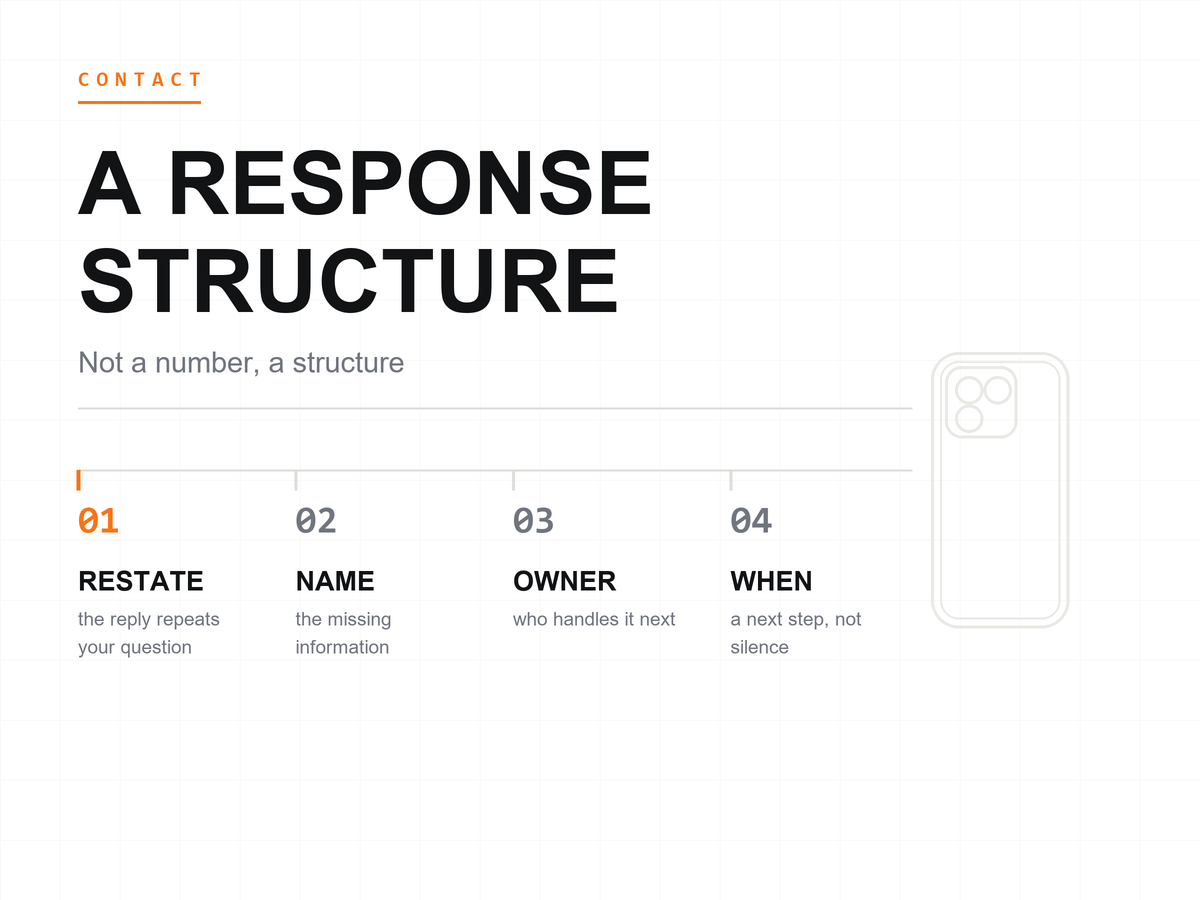
Read the reply against three questions, because each one separates a factory from a front desk. Did the supplier restate your points in their own words before answering them? A restatement is the cheapest proof of understanding there is, and its absence is the first warning. Second, did the reply say which points are finish and which are structure? That is engineering judgment, and it cannot be produced from a catalog, because it needs someone who has seen the drawing. Third, check what the reply leaves behind: a corrected version should keep its own place beside the one it replaced. Version discipline sounds like paperwork until the day two sides disagree about which sample was approved.
When a structured note reaches iFunSmart, we reply to each revision point point by point, in the order the note was written, so the buyer can check every answer against the line it belongs to.
Honesty about limits belongs here too. We do not quote turnaround days in this article, and we do not quote them before a note has been read, because a round is assessed item by item — a finish list and a structural list are different bodies of work, and saying which one you have is more useful than guessing.
Reading Turnaround Without Chasing It
Turnaround is evidence, not a score, and chasing it alone misreads the test. A reply that arrives quickly and says nothing has moved nothing. Speed without structure is the combination to distrust, because it promises motion while naming nothing that moves; the fast OK is where most disappointing rounds begin.
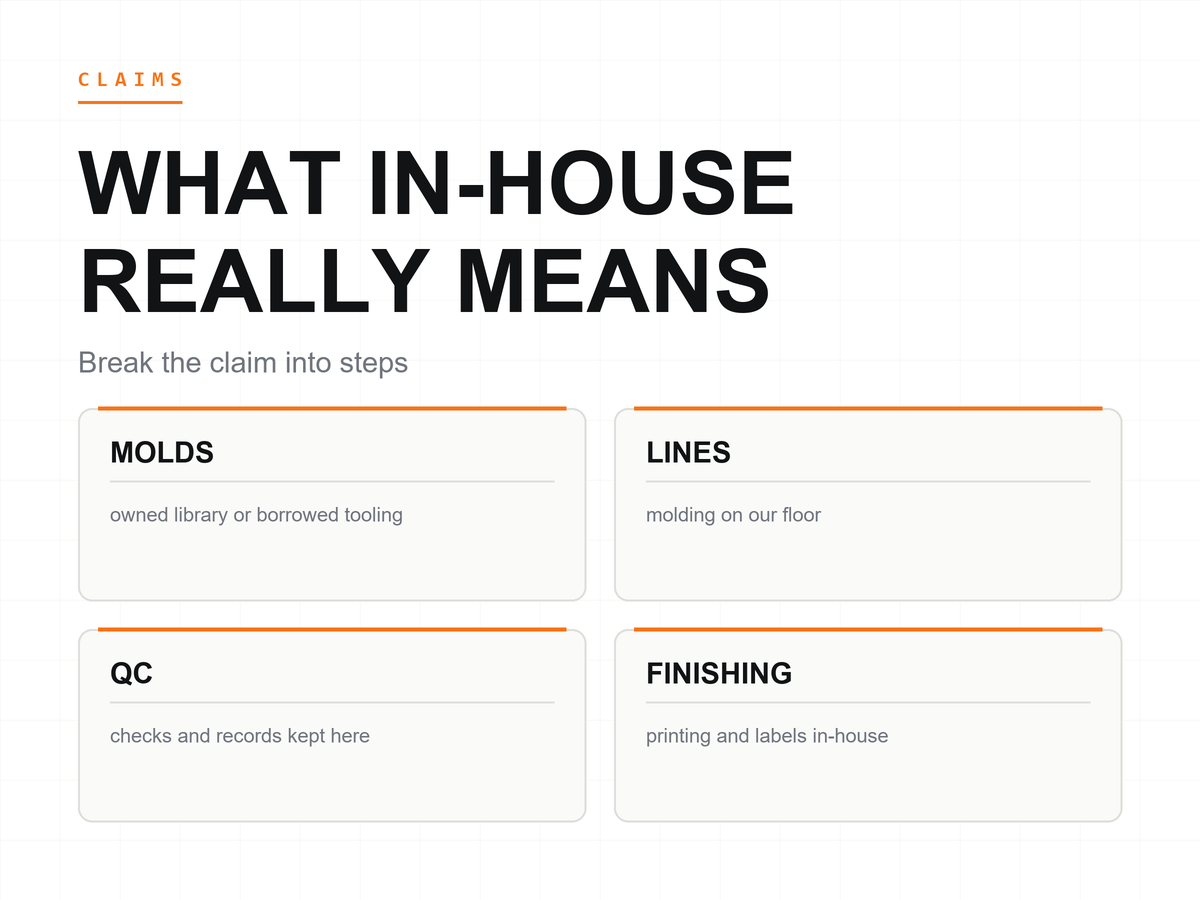
The question a round answers is not how quickly a supplier types but whether a factory stands behind the reply — whether the person writing it has seen the drawing, can walk to the toolroom, and will say plainly which points travel cheaply and which reach the steel. Depth of that kind is a hardware question. iFunSmart runs in-house CNC and 1:1 precision molding at its Guangzhou factory, with 1,000+ molds behind the catalog, so a structural answer comes from the people who will cut the correction rather than from a message forwarded on.
Common Questions From Buyers
Does a fast reply prove anything on its own?
It proves that someone answered, and that is where the proof ends. The content carries the evidence: a restatement of the points, a sorting of finish against structure, an honest naming of any point that reaches the tool. A quick answer with none of those parts is a lighter signal than a considered one with all of them, because the first can be written by anyone and the second needs a factory.
Can finish and structure points travel in one round?
They can travel in one note, and they should, because splitting them yourself takes the engineering knowledge you are trying to test. What matters is the return. Finish points can be corrected on the sample in hand, while structural points may wait on the drawing or the tool, so ask the supplier to say in the reply which points come back together and which do not. That answer is itself a test result.
Why would a small change need new tooling?
Because a mold is steel, and steel holds the shape it was cut to hold. Shifting a shade or quieting a texture touches nothing beneath the surface. Moving a clip deeper or thinning a wall changes geometry the steel carries, and the steel has to be re-cut or replaced before the sample can carry the change. An honest supplier says this at the start of a round rather than at the end of one.
What to Do Next
Before the next round, write the note as a list: one point per line, each with its location and its expectation, all of it in one message. Read the reply the way you read the sample, for structure. A supplier who restates the points, sorts finish from structure, keeps versions on the record, and names the steel when steel is involved has shown you the thing a sample alone cannot: how the work behind the work behaves.
iFunSmart is a Guangzhou factory founded in 2010, with 15+ years in phone cases and accessories. Send us the note you have written and the sample it describes; the answers will come back line for line, in the order you asked.
Send us your revision note as written, and we will reply to each revision point point by point.
Apple and iPhone are trademarks of Apple Inc. iFunSmart is an independent manufacturer of phone cases and accessories and is not affiliated with, authorized, sponsored, or endorsed by Apple.