Oct 9, 2026Business Solutions
The Third Order: Make Reordering a Rhythm
A first order is a test and a second is a reaction. The third order is where rhythm starts: fixed review points, standing slots, and calmer decisions.
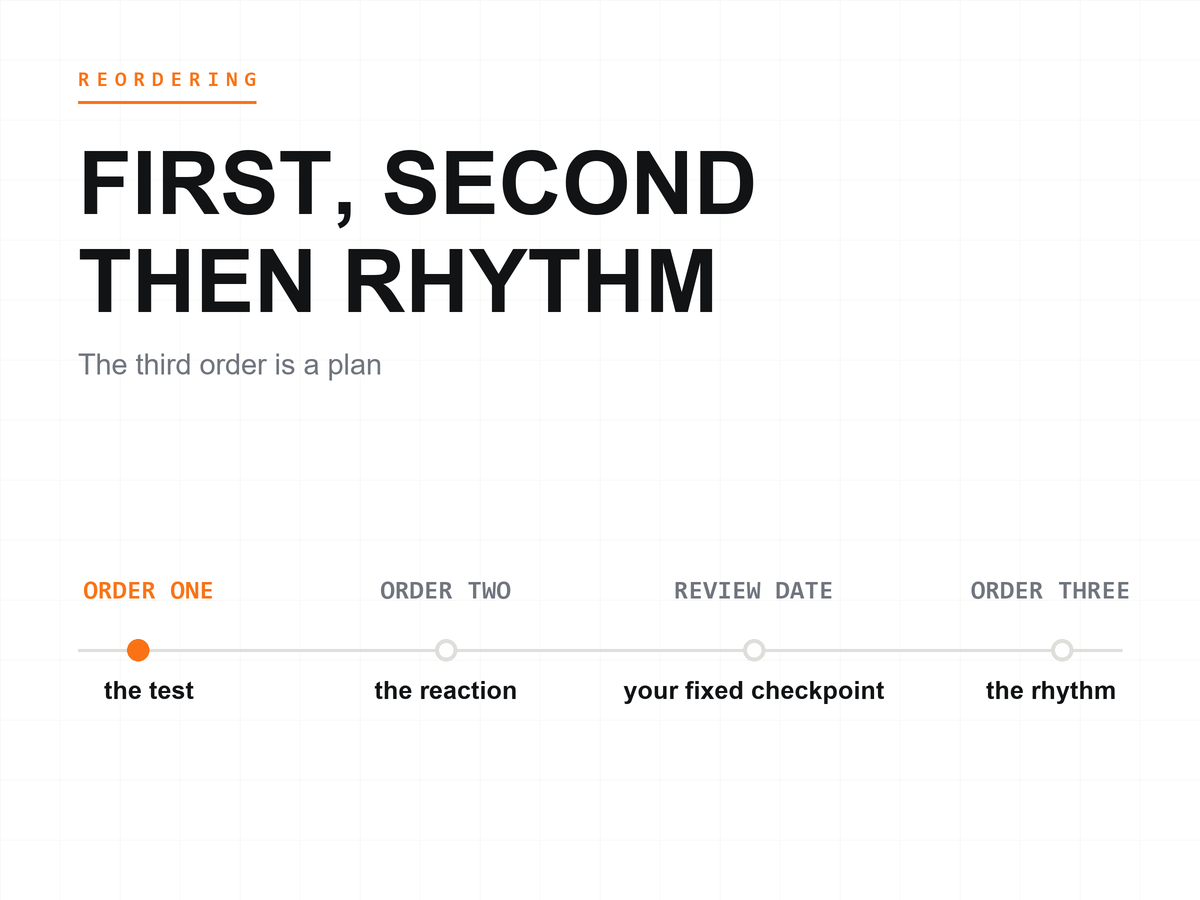
A first order tests the water. A second order chases what sold. The third order is where reordering stops being reflex and becomes routine: review points on a fixed date you set, a standing slot with your supplier, and decisions read off a sheet instead of a hunch. iFunSmart calls that routine a reorder rhythm.
Last updated: October 9, 2026.
First a Test, Then a Reaction
The first order asks a plain question: does this build survive contact with real shoppers — the finish, the fit, the packaging, the way it photographs. The second order is a reaction to the answer. It moved, so it comes back in. Both are honest postures, and neither scales, because a buyer who only reacts buys under pressure. The shelf empties first, the call to the factory comes second, and freight takes whatever room is left.
Reaction has a cost you can hear in the language around it: urgent restock, rush booking, whatever color is still available. Somewhere around the third order, the smarter move is to give reordering a shape before it needs one.
A reorder rhythm is a fixed set of review dates, order windows, and supplier check-ins that turns repeat purchasing from reaction into routine. The rhythm belongs to the buyer who runs the shelf, because it hangs on a sales cycle only that buyer can see. A factory watches many rhythms pass through its schedule. Yours is the one nobody else will set for you.
Review Points: The Same Sheet on the Same Date
Pick a review date on your own calendar and keep it the way you keep a stock count. Every arrival gets read on the same sheet: what landed, what moved, what stalled, and what shoppers asked for and did not find. The inputs are ones you already own — shelf counts, marketplace dashboards, the invoice history with your factory — and our piece on where first sell-through data comes from covers the same ground.
The value of a fixed date is comparability. The same fields, read on a date you chose, tell you a color is fading against its own history rather than against a mood. Read on the morning the shelf looks wrong, the same numbers feel like an alarm, and alarms make blunt decisions. Calm is a calendar feature.
Order Windows and Standing Slots
The review date feeds an order window: the stretch right after each review where you decide what goes back on the line. The window is an appointment you keep with yourself, sized to your sales cycle rather than to anyone else's default. Decisions made inside it are cheaper, because the sheet is fresh and the shelf has not started dictating.
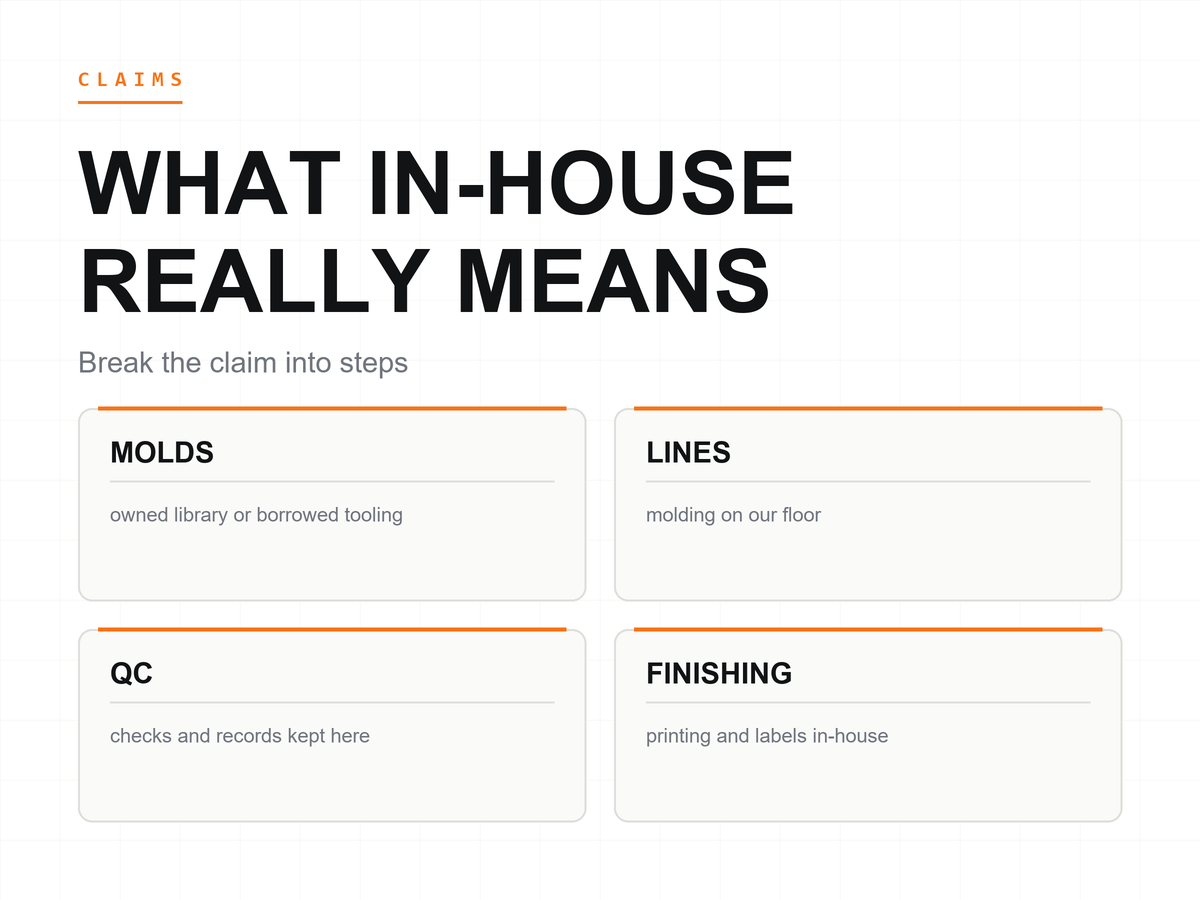
The supplier side runs on the same calendar. Production time is planned before your message lands in an inbox, and a heads-up travels through that planning more smoothly than a rush. iFunSmart molds 500K+ units a month in Guangzhou, and your slot in that flow is a conversation rather than a scramble. Tell us the shape of your year — the builds you reorder most, the season your demand bends — and we can note your reorder rhythm and keep the slot conversation open.
Be honest about what that note is worth. It puts your pattern on the planner's desk, and it does not reserve the line against other buyers. What the slot conversation can hold depends on the season and the machine load, which is why the conversation stays open instead of closing into a promise.
When Should You Tell a Supplier About Your Rhythm?
After the second reorder has confirmed the first. Until then you are describing a guess, and a guess written into a calendar hardens into a mistake. Once the pattern has repeated, the description writes itself: the builds that anchor the shelf, the colors that earn their restock, the stretch of year that bends your demand. Add what would pull a decision forward — a promotion, a local holiday, a launch — and the supplier has something usable to plan around.
What Changes on the Third Order
The third order stops being a copy of the second. Restocking still leads, because the mainline comes back before anything else does. Take a mainline SKU on the rhythm — a magnetic flagship build for the iPhone 18 Pro Max, made to hold its slot on the wall while the colors around it rotate.
The rhythm then adds what a reactive purchase skips: planning. Deepen the color the sheet keeps circling, trial a candidate from the watchlist, and retire the tail that has stalled through a full cycle. None of that is restocking. All of it needs the calm a fixed date provides, and none of it happens while every purchase is a rescue.
A watchlist holds candidates without committing to them: a finish your counters keep hearing about, a build you suspect could sit beside the mainline, a slow mover you have not yet decided to retire. If you are drafting yours, ask us which of our builds have already been photographed, so the candidates you shortlist arrive with images ready for your listings.
Common Questions From Buyers
Does a rhythm stop stockouts?
It lowers the temperature of reordering and moves your conversation with the factory earlier, and that is the honest size of the claim. A rhythm does not promise that a fast color stays on the shelf by itself; a strong selling stretch can outrun any plan, and a color that dies mid-cycle is an emergency rather than a rhythm problem. Emergency restock has its own playbook on this site. The rhythm covers the planned part of reordering and leaves the rescue to the rescue plan.
What belongs on a watchlist?
Candidates, not commitments. A matte build you suspect could sit beside the mainline — a matte SKU on the watchlist, a translucent matte MagSafe build for the same handset — belongs there, and so do the finishes your counters keep hearing about and the slow movers awaiting a verdict. Nothing on the list is promised a purchase. It rides along on the review sheet until a review date promotes it, keeps it, or deletes it.
Can a rhythm start later than the third order?
It can. The third order is a convenient starting line because there is finally some history to describe, but the calendar does not care when you begin. If the next arrival is when you can keep a date, start there. What matters is that the review lands on a date you set instead of on the morning the shelf looks wrong. iFunSmart does not set your review cadence; we work to the rhythm the buyer brings us.
What to Do Next
Set the review date first, and keep the sheet to fields you will actually read. Give the order window a place right behind it. Then describe your rhythm to your factory in plain shapes — the builds that anchor the shelf, the season that bends your demand, the events that would pull a decision forward — so the planning happens before the shelf demands it.
iFunSmart is a Guangzhou factory, founded in 2010, with 15+ years in phone case and accessory manufacturing and buyers in 30+ countries. We mold 500K+ units a month on our own lines, and the slot conversation stays open to the rhythm you bring us.
Send us the rhythm you want to run, and we will note it and keep the slot conversation open.
Apple and iPhone are trademarks of Apple Inc. iFunSmart is an independent manufacturer of phone cases and accessories and is not affiliated with, authorized, sponsored, or endorsed by Apple.