Sep 21, 2026Business Solutions
AQL for Phone Case Buyers: The Inspection Talk Worth Having
One conversation before production prevents most quality disputes. What AQL means, which defect categories to agree on, and what happens when a batch fails.
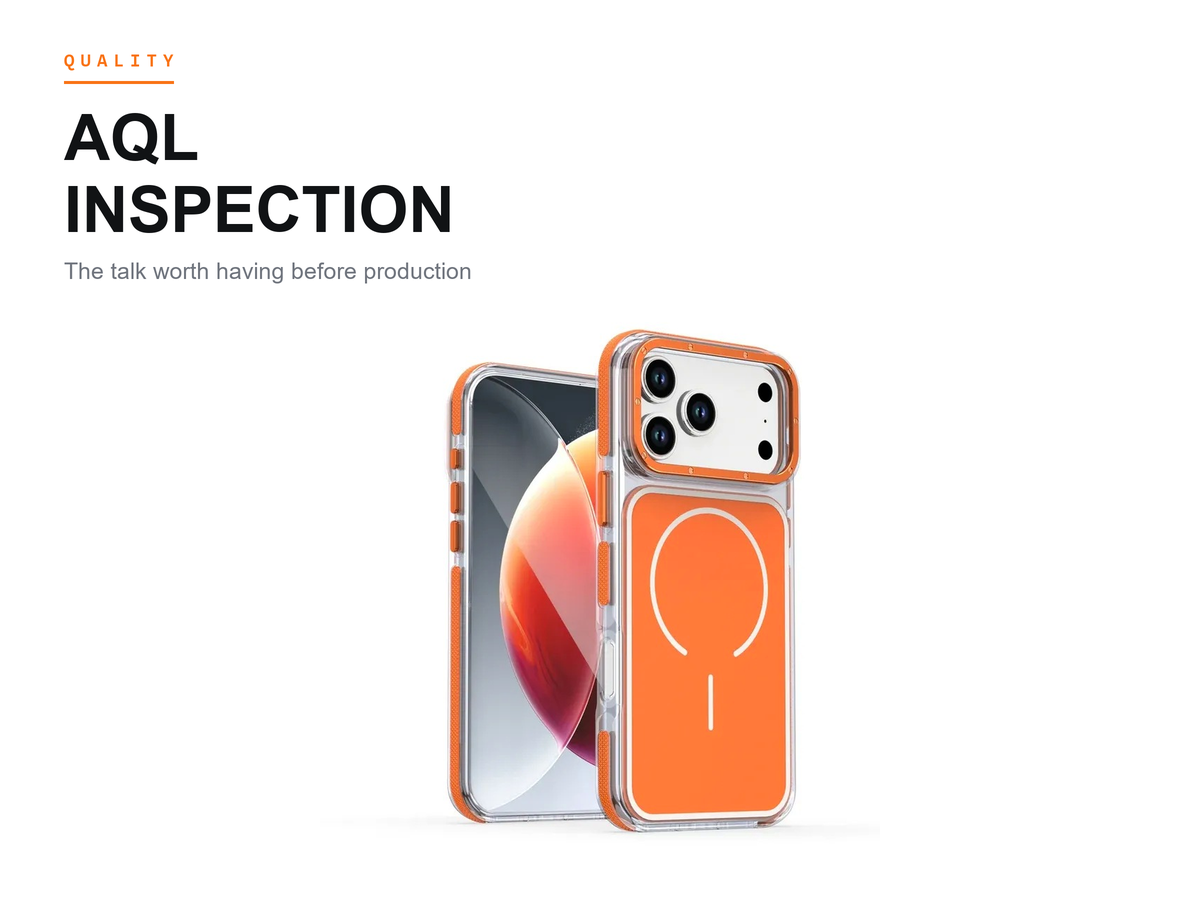
Most wholesale buyers of iPhone and Samsung cases never say the letters AQL out loud, and it costs them. AQL, or Acceptable Quality Limit, is the defect rate an inspection will still pass, and it is the single sentence that turns "the quality was bad" into "here is what we agreed, here is what we found." One conversation before production prevents most of the arguments that come after it.
Last updated: September 20, 2026.
What AQL Actually Means
An AQL is the maximum number of defects an inspector can find in a sample and still call the batch acceptable, drawn from a defined sampling plan.
The definition matters because "quality control" without a number is unfalsifiable. Every factory claims it. What separates claims is whether the buyer and the factory have agreed, in advance, how many units get checked, which defects count and how severely, and what happens when the sample fails. An AQL conversation settles all three; a handshake settles none.
Two numbers usually anchor the talk in this industry: AQL 2.5 for major visual and functional defects on general consumer goods, and a stricter level where fit and function demand it. The exact figures are negotiable, but the existence of a figure is not — a factory unwilling to name one is asking you to absorb all of the risk. One boundary belongs here too, and we would rather state it than let it be assumed: an AQL level is not an industry law and is not set by us alone. It is an agreement between buyer and factory for a specific order, and the level that suits your market cannot be verified until it is settled in writing.
Why "100% Inspected" Needs a Follow-Up Question
Full inspection sounds like the strongest possible claim, and it can be, but only when the buyer can ask what the inspection actually checks.
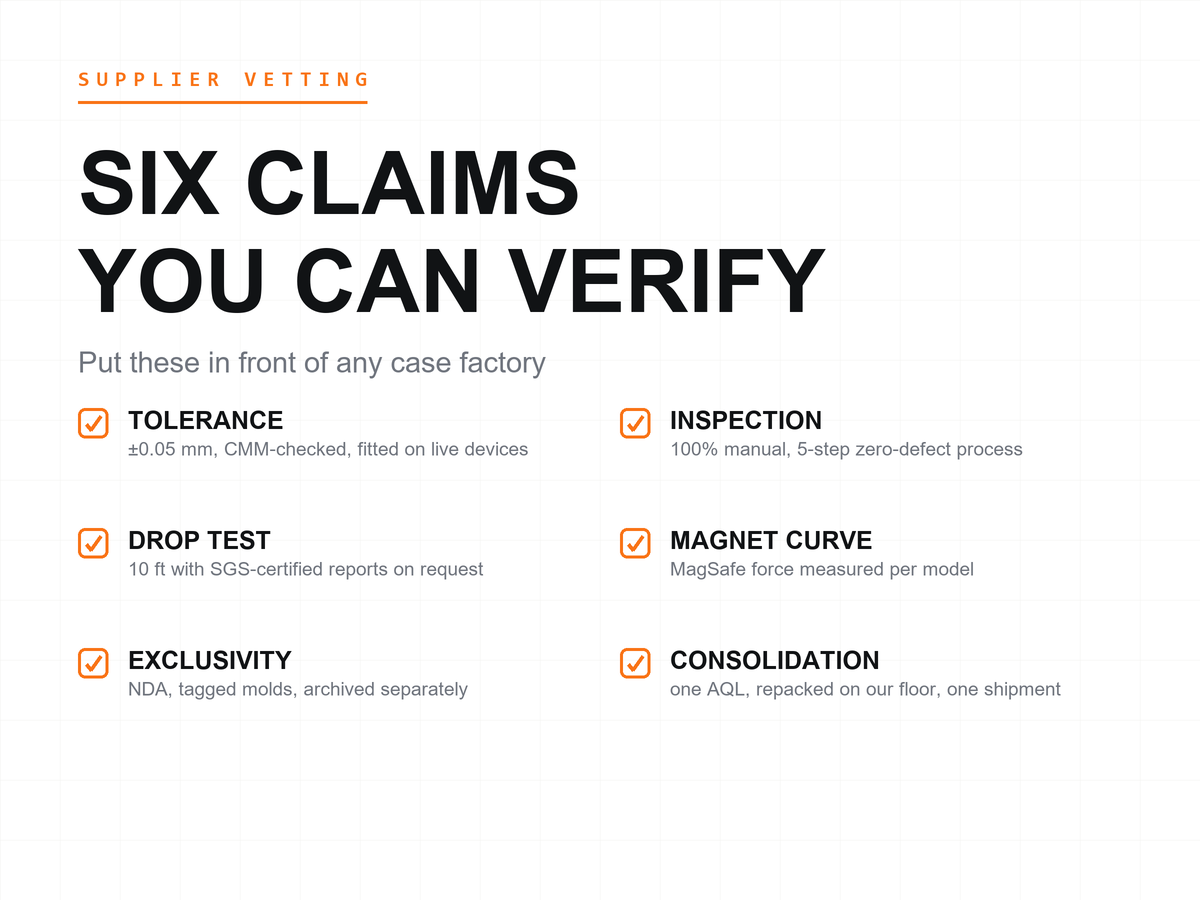
We run 100% manual inspection through a five-step zero-defect process, with first articles test-fitted on live handsets, and we tell buyers so because the details are what make the claim worth something. The follow-up questions any buyer should ask are the same whether the factory inspects every unit or samples: which defects count as major, which as minor, and who decides the borderline cases.
An inspection without defect definitions produces a pass/fail on the inspector's mood. An inspection with agreed definitions produces a result both sides can act on, because the categories were settled before a single case was made. Our [[five-step inspection is described in full -> /posts/zero-defect-strategy-our-5-step-quality-control-process-before-shipment]], so the steps can be read before they are relied on.
The Defect Categories Worth Agreeing On
Phone case defects divide into three severities, and the worth of the talk is in listing them concretely.
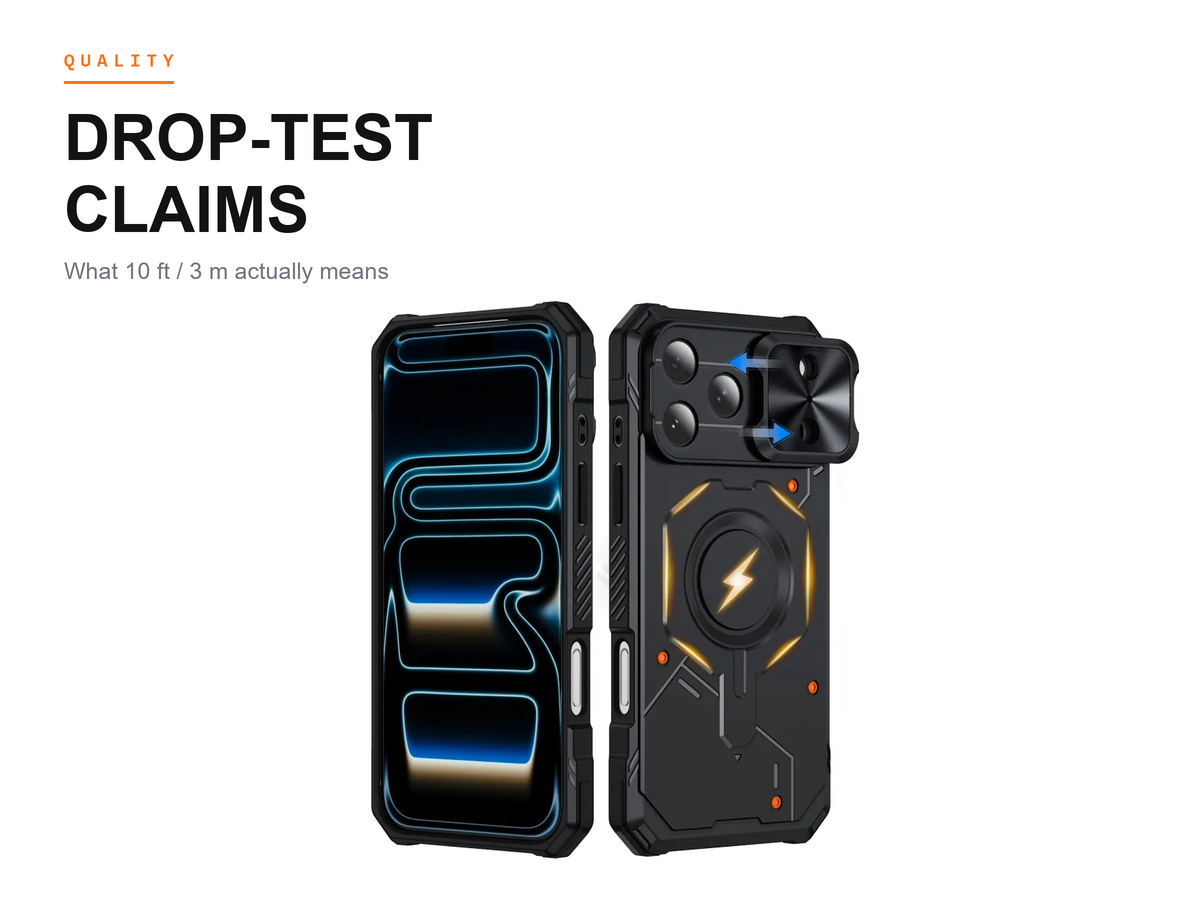
Critical defects are the ones that make a case unusable or unsafe: a mold flaw with a sharp edge, a camera opening that blocks the lens. The rugged Shock Pocket armor line is built and inspected against exactly this tier. Major defects are visible and likely to drive a return: a crooked print, a button that sticks, a fit gap at the corner. Minor defects are cosmetic and small: a light scuff inside the packaging, a faint flow line on a surface the customer never looks at. On a clear cosmetic-grade build the visibility floor is higher, which is one reason the defect list should be agreed per product rather than per factory.
Agreeing on which examples fall into which tier is where buyers discover how differently two factories can see the same case. It is also where a good factory proves its standards, because a supplier who walks through defect examples from their own floor is describing a process, not reciting a policy.
What Happens When a Batch Fails
The inspection conversation is incomplete until failure has an answer.
The standard structure is simple: if the sample fails, the batch is either reworked and re-inspected, replaced, or credited, and the buyer chooses the channel for the evidence, usually photos and the batch number. On our own terms, where a deviation is confirmed as ours, a replacement run is arranged under the conditions written into the order confirmation — which is the same fit-guarantee language we publish elsewhere, and it exists precisely so that a failed batch is a process, not a dispute.
The buyers who get fair treatment here are not the ones who trust most; they are the ones who asked what happens on failure before sending a deposit, and got it in writing.
How to Have This Conversation in One Message
The whole negotiation fits into a short message, and asking it signals what kind of buyer you are.
The message asks four things: what AQL level the factory proposes for the order, which defect examples they classify as critical, major, and minor, whether inspection is full or sampled, and what happens when the sample fails. Four questions, one email, and the answers sort serious factories from intermediaries faster than any price comparison.
Buyers often worry the questions will offend a supplier. The opposite is true in practice: a factory with nothing to hide answers quickly, and a factory that answers precisely is telling you how every later problem will be handled.
Common Questions From Buyers
What AQL level should I ask for on phone cases?
A common starting point for consumer accessories is AQL 2.5 for major defects, tightened where fit and function matter most to your market. The exact level is negotiable, and the more useful part of the conversation is the defect examples: agree what counts as major before production, because that list decides the inspection.
Does 100% inspection remove the need for an AQL?
No. Full inspection still needs agreed defect definitions and a stated outcome when a unit fails, which is what the AQL conversation provides. Coverage tells you how many units were checked; the AQL framework tells you how the findings were judged. Both belong in the agreement.
What evidence should I ask for with the inspection?
Photos of the inspection itself, the defect examples used for the classification, and the result for your batch by order number. Evidence attached to your order, not generic certificates, is what makes the agreement real on the day it matters.
What to Do Next
Our five-step inspection, the defect classifications we use, and the failure terms written into our order confirmations are all things we will walk you through before a deposit, because they are the terms the order will actually run on.
Send us the models and volumes you are planning and we will put the inspection standard for your order in writing, alongside the quote. For context, the [[QC process behind it -> /posts/zero-defect-strategy-our-5-step-quality-control-process-before-shipment]] is published, and the [[packaging sign-off that gates production -> /posts/holiday-notice-october-1-7]] works the same way.
Send us your models and we will put the inspection standard in writing before your deposit.
Apple, iPhone, Samsung, and Galaxy are trademarks of their respective owners, used solely to indicate compatibility. iFunSmart is an independent manufacturer of phone cases and accessories.