Business Solutions
Reading an Inspection Report Without Arguing
An inspection report is a set of observations, not a verdict. How to read the findings, decide what actually passes, and agree what happens next.
An inspection report records what an inspector saw in a sample at one moment, and nothing more. iFunSmart treats the document that way, because a report tells you what was found, while a written acceptance criterion tells you what the finding means.
Last updated: November 4, 2026.
What a Report Really Records
An inspection report is a log of observations: what was examined, where, by whom, and what the examiner saw. It is not a judgement about the batch, and it is not a certificate. The judgement belongs to the criterion both sides agreed to use.
A report is not a verdict.
Two buyers can hold the same report and reach different conclusions while both read it correctly. A scuff is a cosmetic note in discount channels and a return risk where the listing promises a clean finish. The observation did not change. The standard did.
Arguments about a report go nowhere. The two sides dispute not what was seen but what it meant, a question settled before the inspection.
Read the Header Before the Findings
Read three things before the findings.
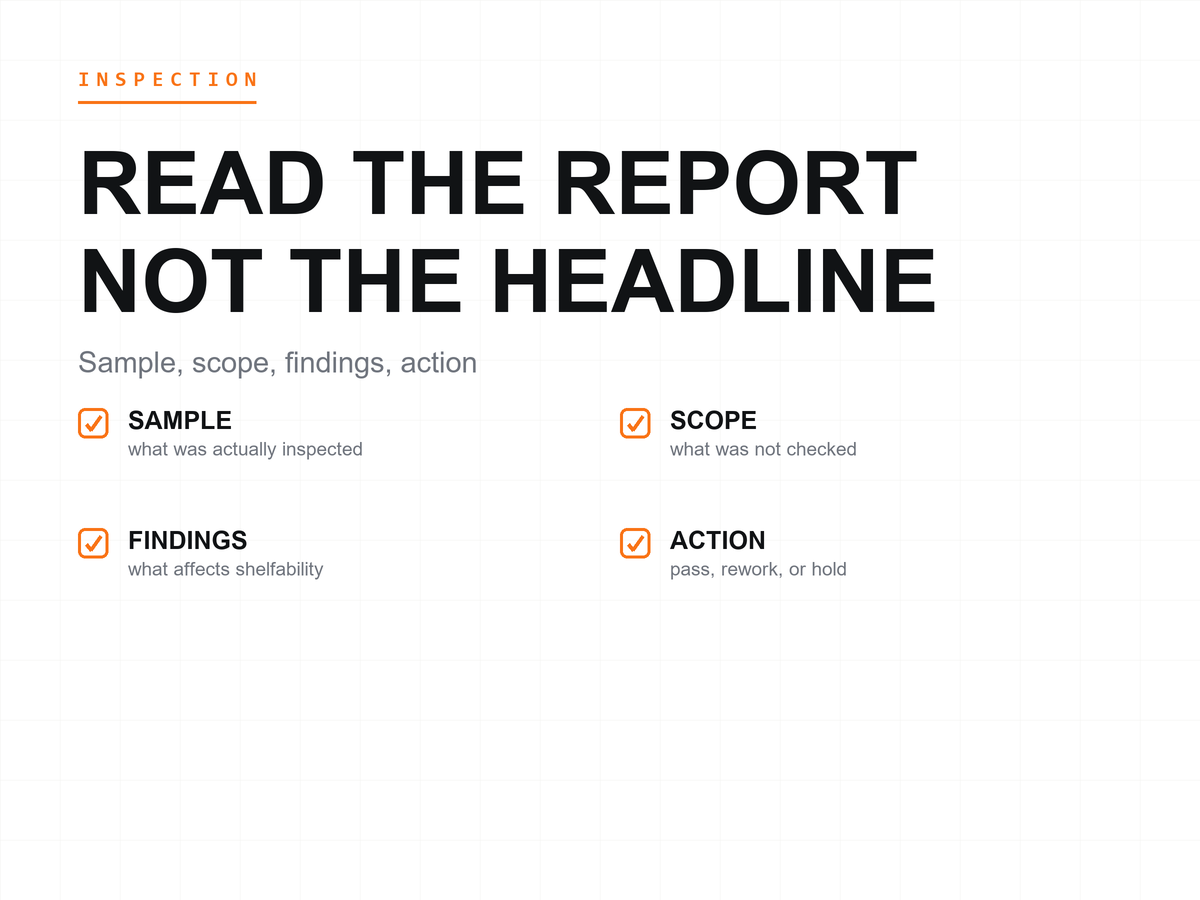
Start with what was sampled, how many units were drawn, and where they came from. An inspection works on a sample drawn from a run, a carton, or a submission set, and those sources are not interchangeable. A sample pulled during production describes the line at that point; one pulled from finished cartons describes the goods after packing. Neither describes every unit.
The checklist comes next. A report covers the items on its list, and an item absent from the list was not examined. A clean result on surfaces and buttons says little about a card slot nobody opened or a hinge nobody cycled.
Who ran the inspection matters just as much. A third party brings an outside name and a stated scope. Your own representative arrives with your standard in hand, and a factory QC team knows the process but also has a stake in the outcome. Our QC team in Guangzhou keeps records for each order, and those records are ours rather than a certificate from an outside body. None is dishonest by nature, but each answers a different question, and the header tells you which one you hold.
An inspection report covers the sample it describes, not the whole batch. Keep that sentence at the top of your reading; every later conclusion rests on it.
Separate Findings by What They Block
The count of findings tells you less than their placement. Sort them into two piles: findings that block a shelf decision, and findings that do not.
A print that drifts across the whole face of a mainline design under inspection blocks listing photos, retail presentation, and the claim the packaging makes. A faint mark inside a hidden pocket may not reach a customer's eye. Both are findings. Only one changes what you can do with the shipment this week.
Placement inside the report matters too. A defect at the same position on unit after unit usually points to a step rather than an accident: a tool mark, a fixture holding the part slightly off. A defect scattered across positions looks more like handling, packing, or transit. That distinction decides who you talk to. A process cause returns in the next run; a handling cause may not.
Read every finding against its product too. The same scratch that passes on a matte utility shell can be a return on a premium build, where the finish is part of what the buyer paid for. The report does not rank its own findings. You rank them by what your channel will accept.
Turn the Findings Into One of Three Decisions
A report becomes useful at the moment it meets a criterion. Without one, the reading turns into a negotiation about taste.
That criterion should exist before the order, not after the inspection. The purchase order clause is the place for it: which items are checked, how defects are graded, and what happens when the sample fails. Writing that clause is a separate job; reading against it is this one. A report does not replace a written acceptance criterion, and no inspector can supply one after the fact.
Against a written criterion, a report leads to one of three outcomes. Release is the clean one: findings sit inside agreed limits and the goods move. Sorting or rework produces a conditional release, the acceptable portion moving while the rest is handled under the clause. A hold follows when findings exceed the criterion, and the batch goes back for rework, remakes, or a commercial discussion.
The conditional outcome deserves the most attention, because it is where paperwork goes quiet. Who sorts the goods, where, and what happens to the rejected portion should be named while the report is fresh. If the clause is silent on those points, agree them in writing before anything moves. A batch split without a written split is how a rework becomes a second dispute.
Disagree Without Calling Anyone Wrong
A disagreement over a report settles faster when it is framed as a question about the document rather than a judgement about the people.
Put three things side by side: the clause text, the specific finding, and your own evidence. The clause carries what was agreed. The finding records what was seen, and the photos or the retained sample show what arrived. With those on the table, the question narrows: which line of the criterion covers this finding, and what does that line require?
That framing keeps the inspector out of it. A borderline mark is not a question of whether the inspector was careless. It is a question of whether the mark crosses the wording both sides signed. If the wording is vague, the fix belongs in the next order's clause rather than in a fight about this one.
Our own position is narrow. We do not publish an AQL figure, and an article is the wrong place to invent one. The sampling plan for an order belongs in the order confirmation, because the right plan follows the order rather than a page on a website. If a supplier cannot tell you how a sample was drawn, the report is not the problem. The missing term is.
If the clause is still unwritten, settle it before the next inspection. A report read against a written criterion settles faster than one read against memory.
Common Questions From Buyers
What Should I Read First in an Inspection Report?
Read the header: what was sampled, which items were checked, and who ran the inspection. Those lines decide what the findings can prove. Then read the findings, sorted by what they block.
Does a Pass Mean the Whole Batch Is Clean?
No. A pass applies to the sample the report describes and to the criterion used to judge it. It says nothing about units that were not examined. That is why the criterion and the sampling plan belong in writing, and why a sealed unit kept from the run beats a second opinion later.
What If the Report Disagrees With What I See on Arrival?
Record the failure and keep the carton label with the goods. Put the finding next to the clause line it touches. The question to put to your supplier is which part of the criterion applies. If the answer depends on wording nobody wrote, the remedy is a term for the next order.
What to Do Next
Read the header and sort the findings by what they block. Then write the decision against the clause. Before the next order, make sure the clause names the checked items, the grading, and the remedy, because a report is only as precise as the criterion it is read against.
Send iFunSmart the inspection report and the clause line it touches, and we will answer the finding in writing against the terms of your order.
Apple and iPhone are trademarks of Apple Inc. iFunSmart is an independent manufacturer of phone cases and accessories and is not affiliated with, authorized, sponsored, or endorsed by Apple.