Business Solutions
Asking About Custom Logo in One Message
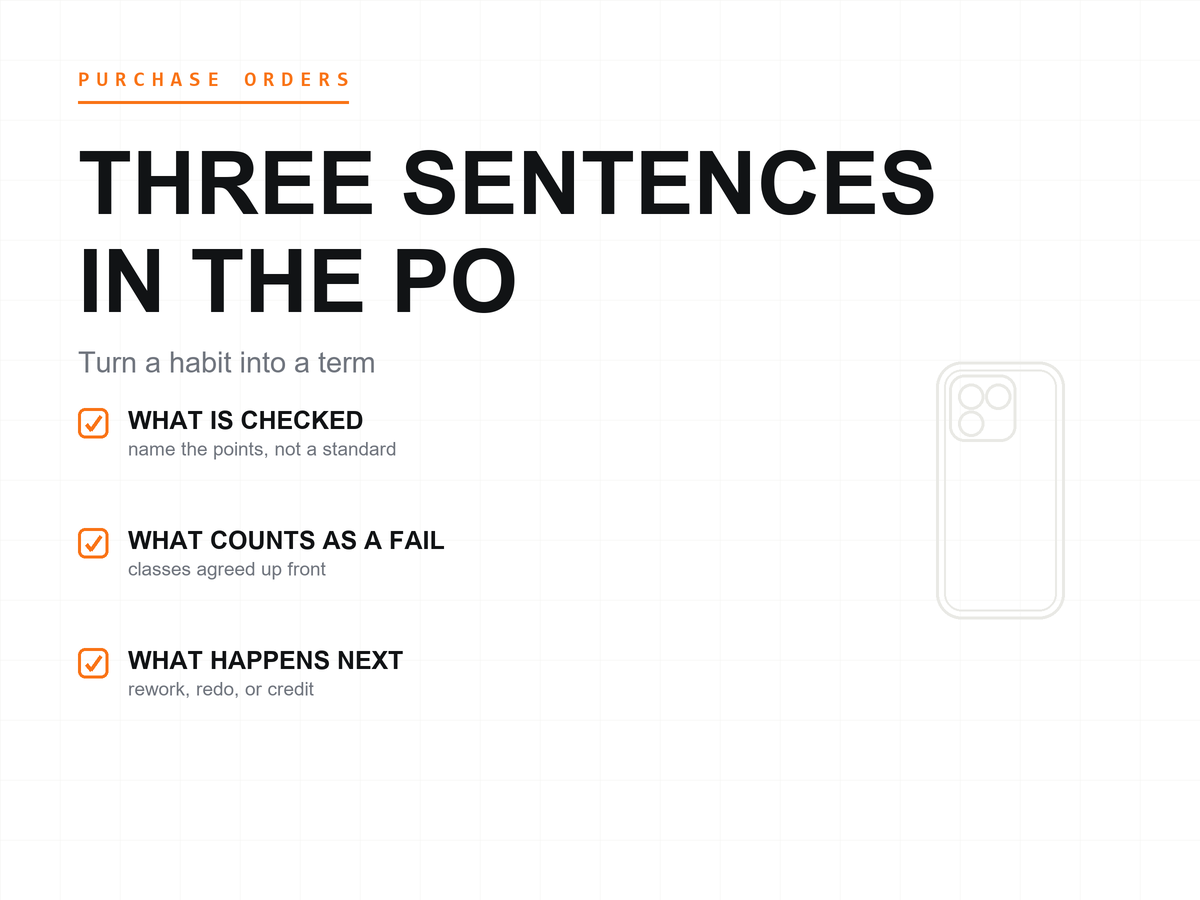
A logo enquiry that arrives complete gets a usable answer. The four things to put in the first message: artwork, method, quantity, and price unit.
A logo enquiry that arrives complete gets a usable answer; one that arrives as two questions gets a polite maybe. iFunSmart answers logo enquiries for iPhone cases, and the ones that get a useful reply name four things: the artwork, the method preference, the quantity, and the price unit.
Last updated: November 3, 2026.
Why a Short Enquiry Gets a Short Answer
The exchange usually starts with two lines: can you print my logo, and what is your minimum order? The reply comes back as "it depends on the design and the quantity," and both sides wait for the other to say more. A factory cannot price a logo without knowing what the mark is, where it goes, how many colors it carries, and how many pieces the run covers.
A complete logo enquiry is a first message that names the artwork, the method preference, the quantity range, and the price unit. With those four lines, the reply can be a worked answer instead of a question sheet sent back. Without them, each missing line costs a round, and a launch window does not wait. Short enquiries get short answers.
The fix is not a longer message. It is a complete one, and completeness has a short list.
The Four Things to Put in the First Message
Start with the artwork, because it decides what a factory can see. A vector file or a high-resolution black-and-white image is the easiest start. State whether the mark prints in one color or several, and whether fine text will fill in at small size. If all you hold is a screenshot or a photo of an old package, say so early, because the mark has to be redrawn before anyone can judge it. Ask who does the redraw and whether that work is quoted on its own line.
The method line is not a request to learn process names. Describe where the logo sits: centred on the back panel, tucked below the camera frame. Then describe the effect: flat ink under a clear finish, a matte mark that disappears into the surface, a metallic sheen, or a raised shape your thumb can feel. Those descriptions let a factory propose a method, and they carry more than a process name used loosely.
A range works better than a single figure for the quantity. Say whether the pieces are one color and one model or split across several, and whether this is a first order or a repeat line. A range tells the factory where setup stops dominating the per-piece cost; a split tells it how many runs the same artwork becomes.
The line buyers most often leave out is the price unit. Ask what the figure covers. Is it the finished case with your logo, or the logo step added to a case price you already hold? Is there a one-time cost for artwork redrawing, a plate, a screen, or a film, and is it listed on its own line? A total that mixes the two hides which part moves when the quantity changes.
Write those four lines into one short message, and check whether a supplier could answer from it alone. If you want a second opinion on the draft, send it over and we will name the line that is missing.
What the Factory Can Answer in One Pass
A factory that receives the four lines can answer most of the remaining questions in one pass. The range of workable methods is part of that reply. Our own work sits in four methods: UV printing, IMD embedded film, silk screening, and heat transfer. A given design may suit one better than another. We do not claim every design can run in every method; the artwork and the placement decide that.
Whether the shell already exists changes the size of the job more than anything else in the message. Most logo work rides a case already in production, and a colored build that takes a logo and an armored build are shapes we already mold, so a logo request on either is a printing question rather than a tooling project. We hold 1,000+ molds, built with 1:1 precision molding at our Guangzhou factory, so the first thing to establish is whether your case already has a mold here.
Setup is the next thing the factory can settle: whether the mark needs a new plate, screen, or film, or can share one already running. Quoting follows in two stages, sample before production and bulk after approval, handled as separate jobs.
What the factory should not do is hand you a number before seeing the artwork. We quote per design and per quantity, because the setup and the per-piece work both move with the mark and the run.
Why "What Is Your MOQ" Slows the Reply
The minimum order question feels like the simplest one to ask, and it is the hardest to answer in one line. A minimum is not a policy number a factory keeps on a card. It is the point at which a specific run stops losing money, and it moves with the method, the model, the case's existing tooling, and whether the quantity is one run or several.
Ask the conditional version instead. Can this artwork go on this case at this quantity, and if not, what is the nearest quantity that works? A factory can answer that directly, because the question contains the variables it needs. The generic version forces a list of conditions back, and the list is long enough that the answer reads as a refusal even when it is not. The number follows the job, not the other way round; we have covered what moves it elsewhere.
One boundary worth stating plainly: we do not publish a MOQ figure. A published figure would be wrong for most designs and would set the wrong expectation for the rest.
Common Questions From Buyers
Does a logo enquiry need finished artwork before it can be answered?
No, and waiting for a finished file can cost more time than sending what you have. A screenshot, a photo of a printed bag, or a sketch starts the conversation, provided you say what it is and accept that the mark will be redrawn before a sample exists.
Is a price per piece or a total more useful to ask for?
Ask for the unit and the content of the unit, then compare. A per-piece figure with the setup listed separately shows which part moves when the quantity changes. A total for the whole run hides that split, and two totals can look different while describing the same work. If the reply gives only a total, ask what it is made of.
What if I do not know which method I want?
Then describe the effect and let the factory map it. Say where the logo sits, whether it should read as flat ink, metal, or a raised shape. A buyer who arrives with a placement and an effect gives the factory something to work from. Method should follow the look.
What to Do Next
Put the four lines into one message: the artwork and its state, the placement and the effect, the quantity range and whether it is a repeat line, and the price unit you want the reply to use. It can be short. What matters is that it closes the questions a factory would otherwise ask.
A logo enquiry that names the artwork and the quantity gets a usable answer. We quote per design and per quantity, and we will tell you which of our four methods fits the mark rather than promising that any method will.
Send iFunSmart your artwork, placement, and quantity range in one message, and we will reply with the methods that fit your mark and a quote built around them.
Apple and iPhone are trademarks of Apple Inc. iFunSmart is an independent manufacturer of phone cases and accessories and is not affiliated with, authorized, sponsored, or endorsed by Apple.