Oct 13, 2026Business Solutions
Deepening a Color That Sold: The Next Order
A test color that moved is a signal, not a verdict. How to deepen it in steps: confirm the signal, add depth to that color alone, record the decision.
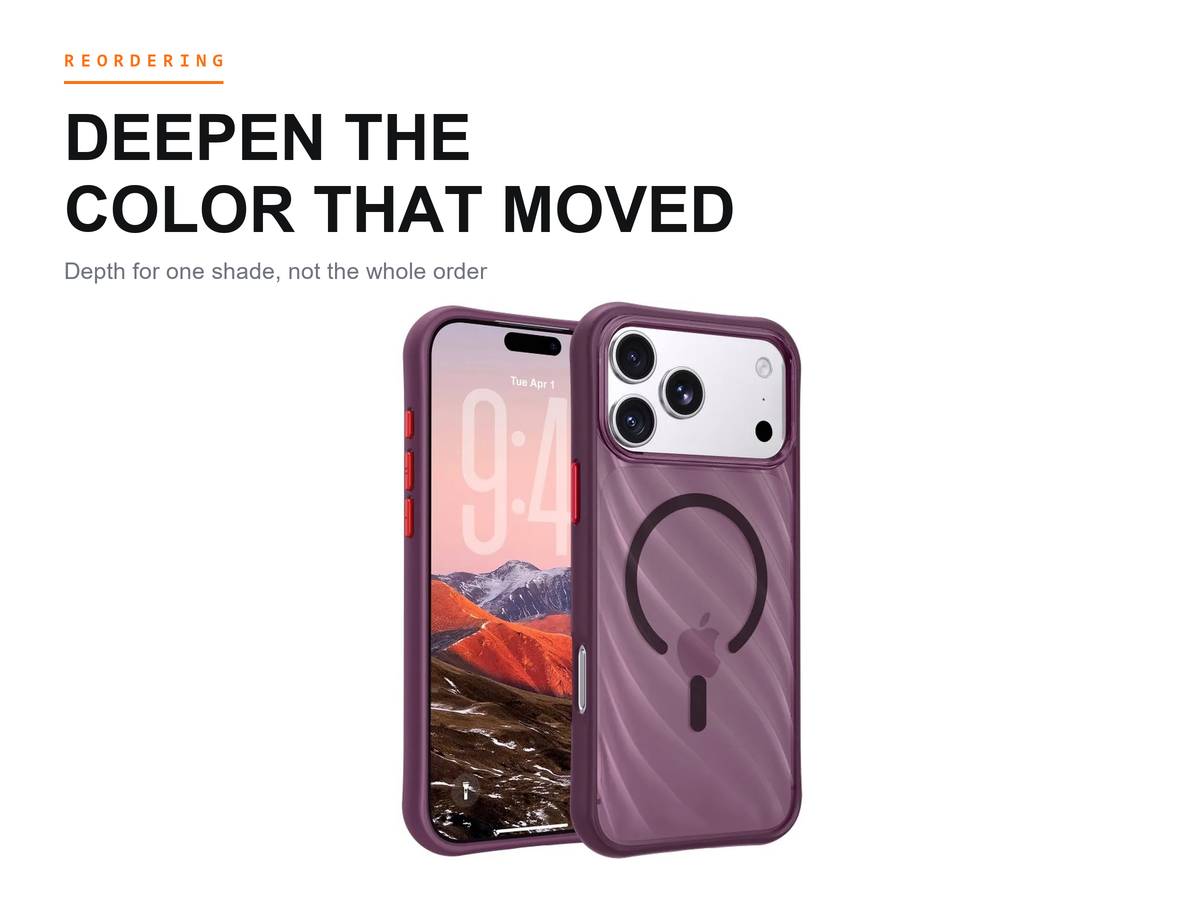
One shade in your iPhone case range moved while the rest of the order sat still. Deepening that shade is the next move, but it is a step, not a leap: confirm the signal, add depth to that one color alone, size it from your own cycle, and record the decision.
Last updated: October 13, 2026.
What Color Deepening Means
Color deepening is the planned addition of depth to a single shade that has already sold, while every other color in the order keeps the depth it was given. A sold-out shade triggers an urgent restock elsewhere; a deepening happens while the shelf still carries cover and the movement is still fresh on the record.
The move is smaller than it sounds. The design stays as approved. No new position enters the range, and the other colors carry the depth they carried before.
That narrowness is the point. A shade with a selling record can carry more depth than a shade without one, and the proven position is where added depth buys information rather than exposure. Deepening is how a buyer grows a range in steps that can each be read.
Buyers describe the same moment often: a shade pulls ahead of the rest of the order, and the reflex is to raise depth everywhere at once. That reflex is where the risk sits, not where the answer does.
Confirm the Signal Before You Lean In
A shade that moved is not yet a shade that repeats. Before any depth is added, settle whether the movement was sustained or a burst. A burst usually has a cause sitting behind it: a promotion, a holiday stretch, a shipping upgrade you offered, or one loud weekend of traffic. A sustained move shows across your ordinary selling period, at ordinary attention, with no event to explain it.
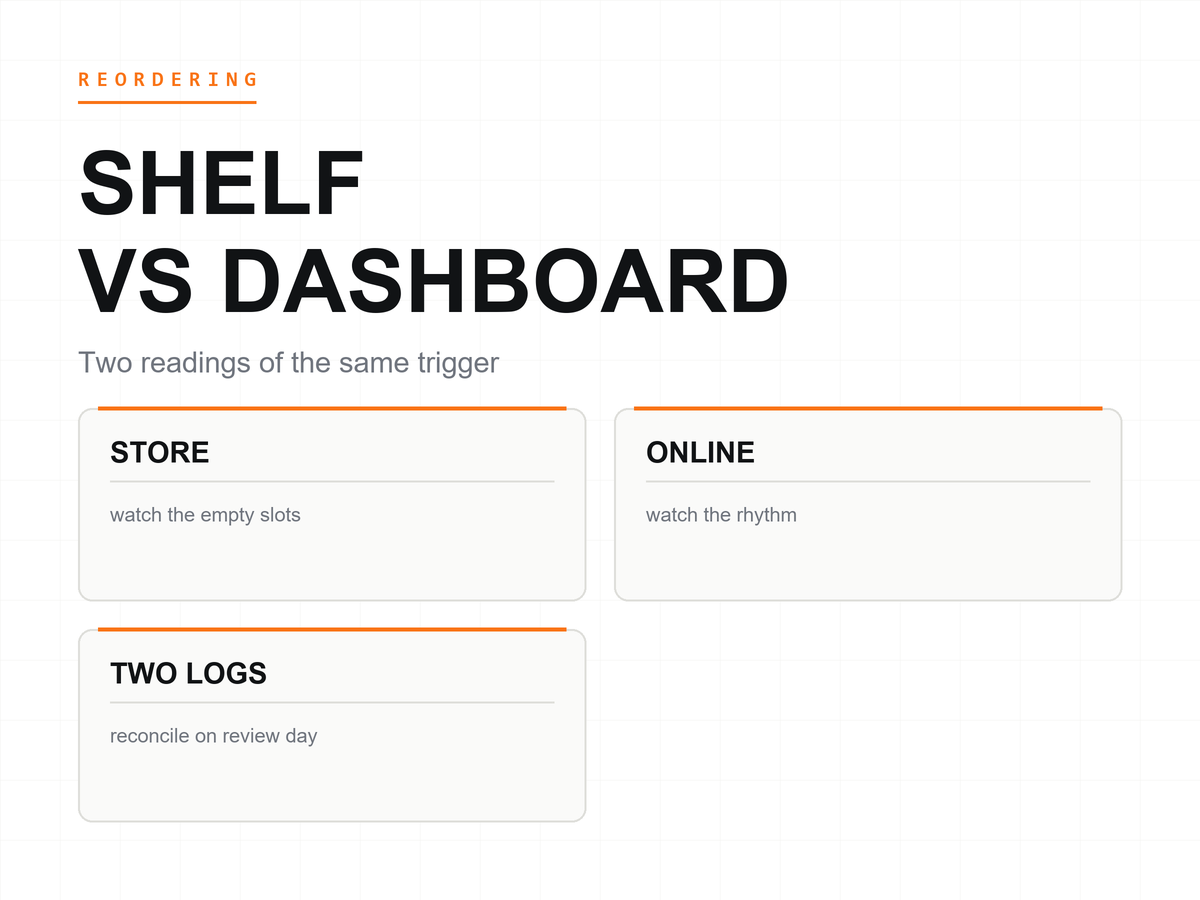
Read your two channels apart before you weigh them together. A store shelf and an online listing report the same shade on different clocks, and a shade that is loud in one can be quiet in the other. We covered that split in an earlier piece on store and online readings; here it decides only whether the signal is clean enough to act on.
A sales bump is not a forecast. If the shade moved during a promotion, it told you about the promotion. If it moved off a thin position, it told you about your own stocking. Neither reading rules the shade out. It means the confirmation is not finished, and finishing it is cheap compared with deepening on a guess.
Deepen One Color, Not the Whole Order
When the signal holds, add depth to the shade that produced it and leave the other colors where they are. Every color in an order carries its own position, and only one of them has a record behind it. Raising depth across the line copies the confidence earned by one shade onto colors that were never tested, and that is how a single experiment becomes whole-order exposure.
From our range, a smoke-finish shade that moved and a smoke option worth deepening are the kind of positions this step is built around. Both sit on molds that already exist, which is what turns a deeper pass into a production matter rather than a new setup. If you want to know which shades we already run for the models you stock, ask and we will name them.
The colors that stayed quiet keep their planned depth. Quiet is not a verdict; it is an unfinished reading. Their turn arrives later, on their own record, once one exists. Whether the range should also widen is a separate call, made on a different set of readings, and it is not this step.
Size the Depth From Your Own Cycle
How much depth to add is answered by your replenishment cycle, not by how loudly the shade moved. The frame is simple: the added depth should be a quantity you can replace on your normal rhythm, production time plus the freight leg you use, without digging into the cover you keep for a busy stretch.
If you already run a trigger line for the shade, the deepening just starts that line from a higher position, and the next purchase falls out of it as usual. If you do not run one, the cycle length you plan to use is the frame, and the added depth is the part of the position that must close inside it. A deepening that outsizes the cycle turns a controlled step into a stock risk.
We do not publish depth rules, because depth depends on velocity and lead time data that sits on your side of the transaction. No supplier can set it for you.
Record the Inputs, Then Grade the Call
Write the decision down the day you make it: which shade moved, in which channel, what the rest of the order did, how much depth you added, and what you expect the movement to do next. That line turns the next review into a reading rather than a memory.
At the review date, ask a different question than the one you usually ask. Not whether the shade sold, but whether the added depth was sized right. If the deeper position sold through on the same rhythm, the call was right, and the line can move up again on the strength of it. If it slowed once the depth grew, the added depth sat, and the record says so before the next order repeats the mistake.
The grade belongs to the decision, not to the color. A shade that slows after a deepening has still paid for the information it produced, as long as the depth was sized so the slow stretch does not block the rest of the range. That is what keeps the move repeatable: a step you can take again, on the next shade that earns it.
Common Questions From Buyers
How do I know the movement is real and not a promotion spike?
Check the ordinary weeks first. A shade that moved at normal traffic, with no event behind it and no thin position underneath, has written a cleaner signal than one that emptied during a promotion. The channel split is the second check: a move that appears on a shelf and in a listing is harder to explain away than a burst in one. If neither check is clean yet, the confirmation simply is not finished.
Should I deepen the whole order or just the one color?
Just the one color. The record exists for that shade and for no other, so it is the only position where added depth is reading demand rather than hoping for it. The other colors keep the depth they were planned with, and their own movement, when it comes, decides their turn. Spreading the increase across the line takes the risk of the whole order up at once, and the reward still depends on the one shade.
What if the shade slows down after I deepen it?
Then you stop deepening it and keep the rest of the order intact. The added depth was the only exposure the step created, and the depth was sized so a slow stretch does not block your next purchase elsewhere. What the slowdown costs you is the difference between the old pace and the new one, measured on one position. The next review grades that reading and closes the loop.
What to Do Next
The step is cheaper when the factory behind it already knows the shade. We mold cases in Guangzhou, and a deepening of a color we already produce runs on the tooling that made the first order, so the only new inputs are the depth and the production slot. The rest is a routine run.
Send us the shade that moved and the depth you are weighing, and we will confirm the production window behind it.
Apple and iPhone are trademarks of Apple Inc. iFunSmart is an independent manufacturer of phone cases and accessories and is not affiliated with, authorized, sponsored, or endorsed by Apple.