Sep 13, 2026Business Solutions
Before You Order in Bulk: The iPhone 18 Pro Fit Checklist
A UK buyer sent us their five-point fit condition before bulk: camera opening, buttons, Camera Control, USB, audio. Here is each check and how it runs.
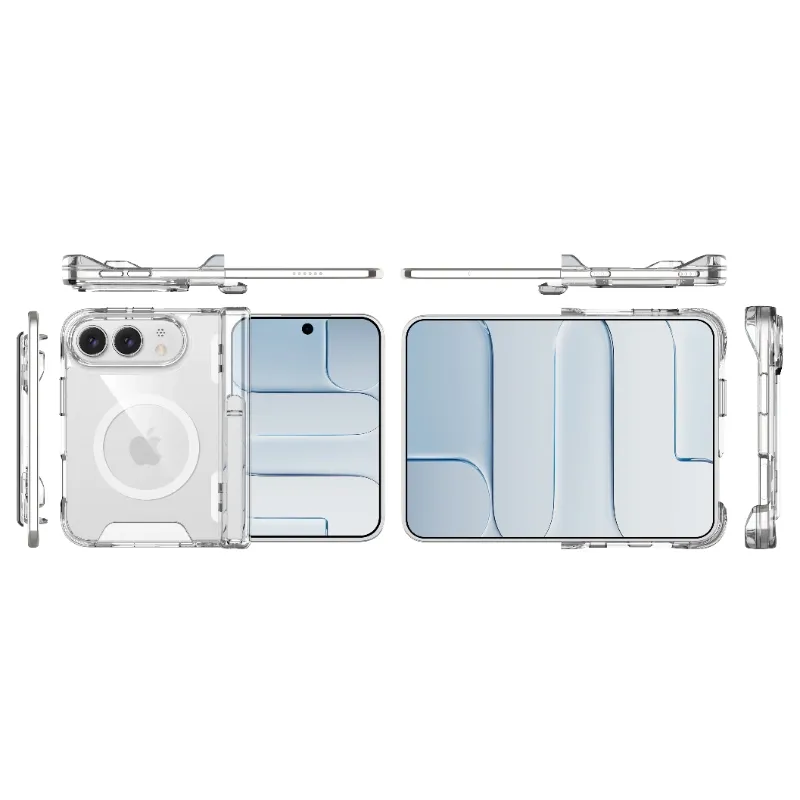
A UK buyer sent us their condition for placing an iPhone 18 Pro order: physically verify the fit on the final retail device before bulk production, including the camera opening, buttons, Camera Control area, USB port, and speaker and microphone openings. That list is the right list. Here is each check, why it fails when it fails, and how it runs in our shop.
Last updated: September 13, 2026.
Why a Fit Checklist Exists
A fit checklist is the set of physical checks a case must pass on the final retail device before a bulk order is confirmed, covering every opening, button, and control the phone carries. The definition matters because "it fits" is not a specification; a checklist turns the claim into items a buyer can demand evidence for.
The buyer who sent us their list did something smart. They did not ask whether our cases are good. They asked for verification, item by item, and their list maps almost exactly onto the openings Apple lists on the iPhone 18 Pro specification page: Camera Control, the Action button, volume buttons, the USB-C connector, and the built-in stereo speaker and microphones. Every one of those is a place where a case that is 0.5 mm off turns into a returned order.
One honest boundary before the checklist. Apple publishes no dimension for the camera plateau, so the camera opening on any pre-launch mold carries uncertainty until a retail unit exists. Our chassis tooling was cut from pre-release 1:1 device data, and the retail-unit check on that data is a scheduled verification step, not a surprise we discovered after shipping.
Check 1: The Camera Opening
The camera plateau is the largest single feature on the back of the iPhone 18 Pro, and it is where pre-launch tooling is most likely to miss. The Pro models carry a new 48 MP Fusion Main camera with a variable aperture, and the plateau houses it.
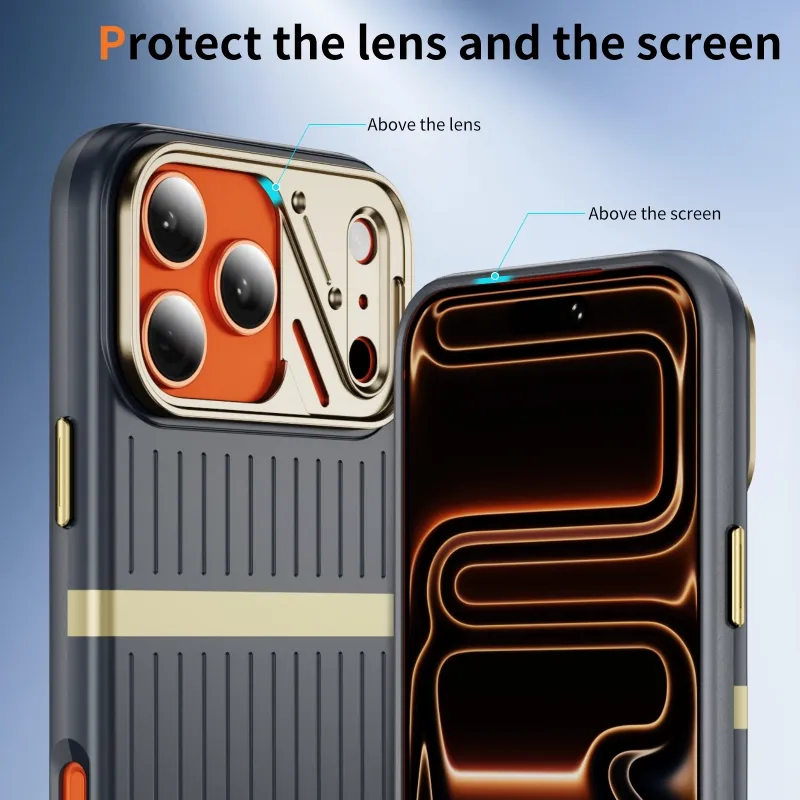
What we verify: the cutout clears the plateau at every edge, the raised lip protects the lenses without crowning into the frame, and the flash and microphone holes inside the camera island line up. What fails in practice is usually a corner, not the center; a cutout that is round where the plateau is square shows up the moment a real phone goes in. Buyers who want hardware-level camera security rather than a raised lip alone can see it in our slide camera-cover armor build.
Check 2: Buttons and the Action Button
The iPhone 18 Pro carries an Action button, volume buttons, and a side button, and button feel is the first thing a customer notices after the case goes on.
What we verify: each button presses through the case with a clean click, not a mushy one, and the cutout alignment holds across the production batch rather than just on the sample. Buttons are also where buyers differ most, which is why our range spans both approaches — some buyers want covered buttons, and our detachable metal-button build exists for that; others want open cutouts for aftermarket buttons.
Check 3: Camera Control
Camera Control is the check most suppliers forget, because it is the newest. Apple's specification lists Camera controls covering exposure, depth, zoom, cameras, styles, and tone, and the control sits where a case's grip ridge usually wants to live.
What we verify: the case does not block the control's travel, and if the case covers it, the cover is conductive so the control still responds. A case that silences Camera Control produces a phone that feels broken, and end customers blame the phone before they blame the case.
Check 4: The USB-C Port
The iPhone 18 Pro's USB-C connector supports charging, DisplayPort, and USB 3 at up to 10 Gb/s, which means buyers plug in a wider range of hardware than a charging cable alone.
What we verify: the port opening clears not just the slim charge cable but thicker braided cables and accessory docks. An opening that passes the charging cable and fails a studio microphone cable is a return waiting to happen, and it is the check that bulk samples catch but a single sample can miss.
Check 5: Speaker and Microphone Openings
The built-in stereo speaker and the microphone set are the quietest failure points on a case. Cover them fully and calls sound muffled; misalign them and audio recordings pick up the case wall instead of the room.
What we verify: every speaker and mic opening on the case sits over its counterpart on the phone, with clearance wide enough that audio does not reflect off the case edge. This is the check we run with a voice recording and a playback, not just with eyes. On a frosted build like our micro-matte MagSafe case, the openings are checked against the spec sheet positions before the run.
How the Checklist Runs Before Bulk
The sequence is the same on every order. A T0 sample is measured against the drawing, then fitted to every physical reference unit we can obtain. When the retail device ships, the case is fitted to it and the full five-check list runs on first production units before anything leaves the factory. Where a deviation is confirmed as ours, our replacement terms apply under the conditions written into the order confirmation — with the device model, photos, and the batch number, reported within the agreed window.
Buyers doing supplier comparisons should turn this checklist into a question: ask each supplier which of the five checks they run on retail units, and what evidence they hand over. The answers separate factories from traders faster than any price sheet. We have written before about how to vet a factory, and the checklist is the concrete version of that.
Common Questions From Buyers
Can I run these checks myself on a sample?
Yes, and you should. Every check on this list runs with the phone, a case, a cable, and a voice recorder. Ask for a sample, run the five checks, and judge the fit with your own hands before the bulk order is confirmed.
What if my market uses an accessory the opening misses?
Tell us before production. A port opening, a button layout, or a Camera Control treatment can be changed at the mold stage cheaply, and at the returns stage expensively. The checklist exists to surface exactly those decisions while they are still cheap.
Do you provide the verification evidence with the shipment?
The measurement sheet from the T0 stage and the retail-unit check results are available on request. Ask for them with your order, and we will confirm what is documented for your specific models and batch.
What to Do Next
The five checks on this list came from a buyer, and they are now standing questions in our order process. Ask for the fit-verification record for your models and we will send it with a sample you can check yourself.
Request the iPhone 18 Pro fit-verification record and a sample, and run the five checks before you commit.
Apple, iPhone, and Camera Control are trademarks of Apple Inc. iFunSmart is an independent manufacturer and is not affiliated with, authorized, sponsored, or endorsed by Apple Inc. Apple product names are used solely to indicate compatibility with our products.