Oct 28, 2026Business Solutions
Packing a Sample Parcel for the Courier
A sample that arrives dented has already told the buyer something wrong. How to pack a single case so the courier cannot spoil the message it carries.
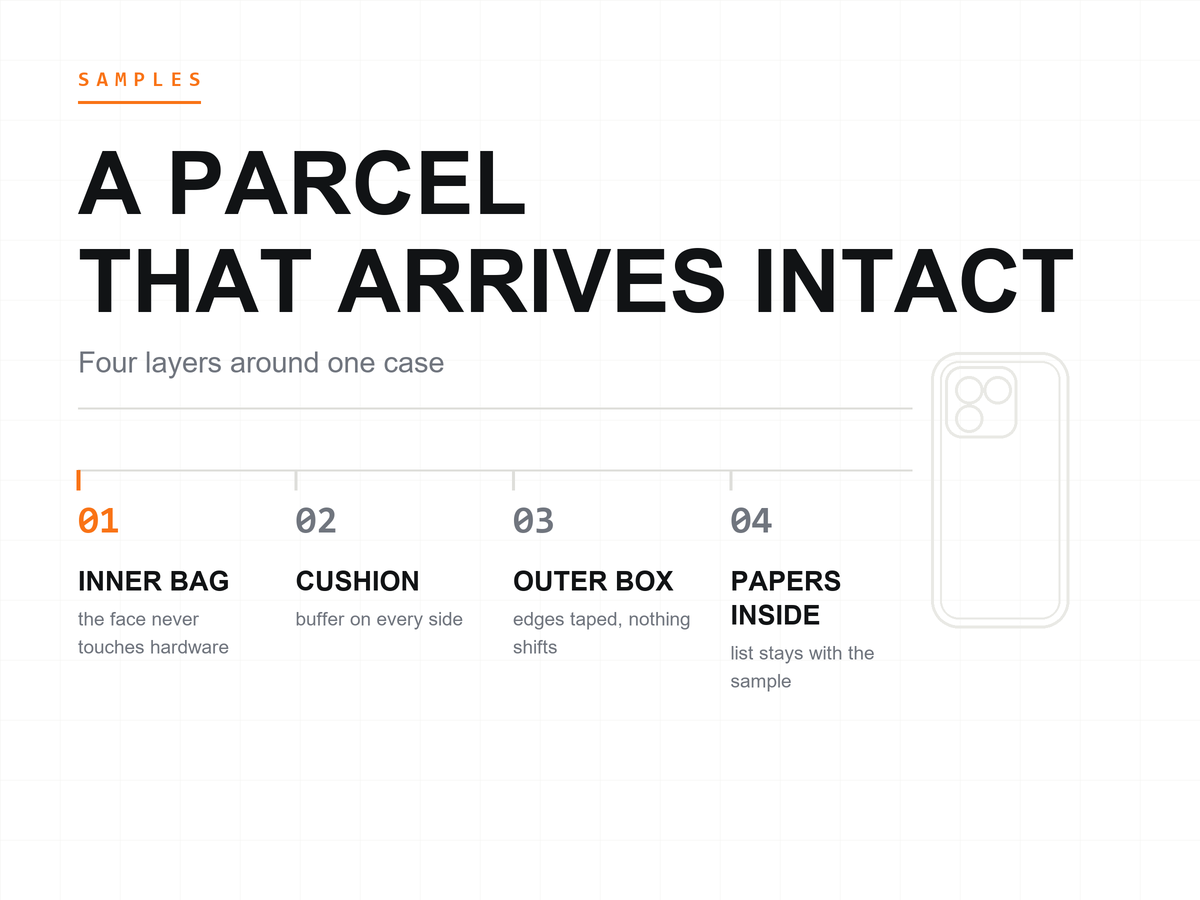
A sample parcel carries the first physical proof an iPhone case buyer receives, and a dented corner delivers the wrong message before anyone opens the box. iFunSmart ships samples from Guangzhou, and the packing that protects them is built in layers, from the bag around the case to the sheet inside the lid.
Last updated: October 28, 2026.
What a Sample Parcel Has to Survive
A sample parcel is a small shipment of one case or a handful of cases, packed to survive sorting belts, stacking, and repeated handling, and to arrive showing the finish the buyer will judge. That is a narrow job with a wide failure range.
A courier network is not a shelf. Parcels ride belts and drop into chutes, then sit under other parcels until someone lifts them. Nobody in that chain sees what is inside. Good packing reduces the risk that the journey adds. Actual transit damage depends on the courier's handling, and no parcel design removes that variable.
The message matters as much as the shell. A buyer opens a sample to decide whether the finish, the color, and the build are worth a bulk order. A scuffed gloss face or a cracked corner answers a question the buyer never asked.
Wrap Each Piece Before It Meets the Box
The first layer is the bag. Each sample travels in its own bag, so the finished face does not touch cardboard, tape, or another case. If two pieces can scar each other on a ride, they travel apart.
A bag takes the light abrasion that vibration creates: the constant micro-rubbing between a case back and the carton wall. Film wears instead of finish. A bag that fits close works better than a loose sack, because a loose sack lets the piece slide inside its own cover.
Hard parts change the bag decision. A case with a metal stand, a raised camera frame, or a card bay carries edged components of its own, and those components can press into the finish during a long ride. That is why a card-holder sample with a metal stand and a rigid frame needs a bag that keeps the stand off the clear panel, not just a bag around the whole piece. The same discipline shows up in bulk cartons, where each SKU travels bagged before the sections are filled.
Give the Parcel a Compression Layer
The second layer is the cushion around the bagged piece. A single case in a thin mailer is a flat object sent into a machine that crushes flat objects. The mailer protects the surface from scuffs and does nothing about the squeeze.
Compression comes from structure, not from more film. A rigid box around the bagged piece, or a double-wall corrugated sheet folded into a cradle, holds the case shape while the parcel is stacked. The cushion's job is to absorb the squeeze so the shell does not have to. Fill every side, not just the top and bottom; a box tight in one direction and loose in another lets the piece pivot.
The finish decides how much care the layer deserves. A smoke surface is unforgiving, because a smoke-finish sample shows a scuff from any angle, and a translucent skin makes a mark read as a defect in the material rather than a rub on the surface. A dark matte shell hides more, but it still arrives in the same box, and the buyer still judges what the box delivers.
Close the Outside Against Impact
The third layer is the carton itself. Tape every seam and reinforce the corners. Then make sure nothing shifts when the box is turned. A carton that rattles on the bench will rattle harder in a sorting hub.
Corner protection earns its place on small parcels, because corners take the first hit in a chute. A padded corner or a snug inner box that keeps the piece away from the outer walls does the same job: put distance between the sample and the impact.
Then test the closed parcel by hand. Tip it, shake it gently, and listen. Movement means the fill is unfinished. A parcel that feels like one solid object has a better chance of arriving as one.
Put the Paperwork Inside the Box
A sample parcel carries two things the buyer needs: the sample and the record of what is inside. Both belong inside the carton.
The sample sheet should name each piece by model, color, and quantity, using the same naming as the purchase documents. A buyer who opens a box of loose cases has to work out which piece is which before any judgment starts, and a sheet that answers that removes the first delay.
Contact details belong inside too. An outside label rubs against belts and other cartons for the length of the journey, and a smudged address or a torn waybill leaves the receiver with a box and no name to call. A card inside the lid survives the trip that wears the outside.
Marking the outside still helps. A fragile sticker tells handlers to take care, and it is a request rather than a guarantee. The inside sheet keeps working after the sticker is gone.
Check the Parcel Against the Channel Before It Leaves
The last check happens before the parcel is sealed. Every courier channel sets its own limits on weight and volume, and a parcel that exceeds them gets repriced, delayed, or returned.
Weigh the packed parcel and measure the carton, then compare both against the channel you chose. A sample case is not the same declaration as a commercial shipment, so check the courier's requirement for the declared purpose before the parcel is sealed. The wording varies by destination and channel. Put the same description on the paperwork inside.
Keep a photo of each packed layer before the lid closes. A photo of the bag, the cushion, and the closed carton settles a damage question faster than memory.
Common Questions From Buyers
How much protection does a single sample need?
Enough to survive the channel you chose, which depends on distance, handling, and how much the finish matters to the decision. One case still needs a bag, a compression layer, and a carton that does not let it move. A sample sent to answer a color question deserves more care than a sample sent to check a mold line, because a marked finish destroys the answer.
Can a padded envelope carry one case?
It can carry the case, and it cannot protect a finish by itself. A padded envelope adds a light cushion and no structure, so the case inside still meets every squeeze the envelope meets. Use one when the sample is a fitting piece that will be handled rather than judged on appearance. Use a box when the surface is the message.
What should the sample sheet inside the box contain?
The model name, the color or finish, and the quantity of each piece, plus a contact name and a reachable number. Keep the wording identical to the names on your own purchase documents, so the sheet and the invoice describe the same piece. A sheet written in a different vocabulary creates a second conversation.
What to Do Next
Pack the sample as if the buyer will judge the factory by the carton, because that is what happens. Work through the layers in order, and put the sheet inside the lid before the carton closes. Then check the parcel against the channel before it leaves the bench.
We do not publish packaging cost figures, because the right packing depends on the piece and the route. iFunSmart has built cases in Guangzhou since 2010, and we pack samples to the plan agreed before the parcel leaves.
Send iFunSmart your next sample request, and we will pack the parcel to a plan agreed before it ships.
Apple and iPhone are trademarks of Apple Inc. iFunSmart is an independent manufacturer of phone cases and accessories and is not affiliated with, authorized, sponsored, or endorsed by Apple.