Oct 3, 2026Business Solutions
The H in N52H: Magnet Heat Tolerance
The letter after a magnet grade is a heat tolerance mark, not a strength mark. Why it matters on dashboards and wireless chargers, and what to ask a supplier.
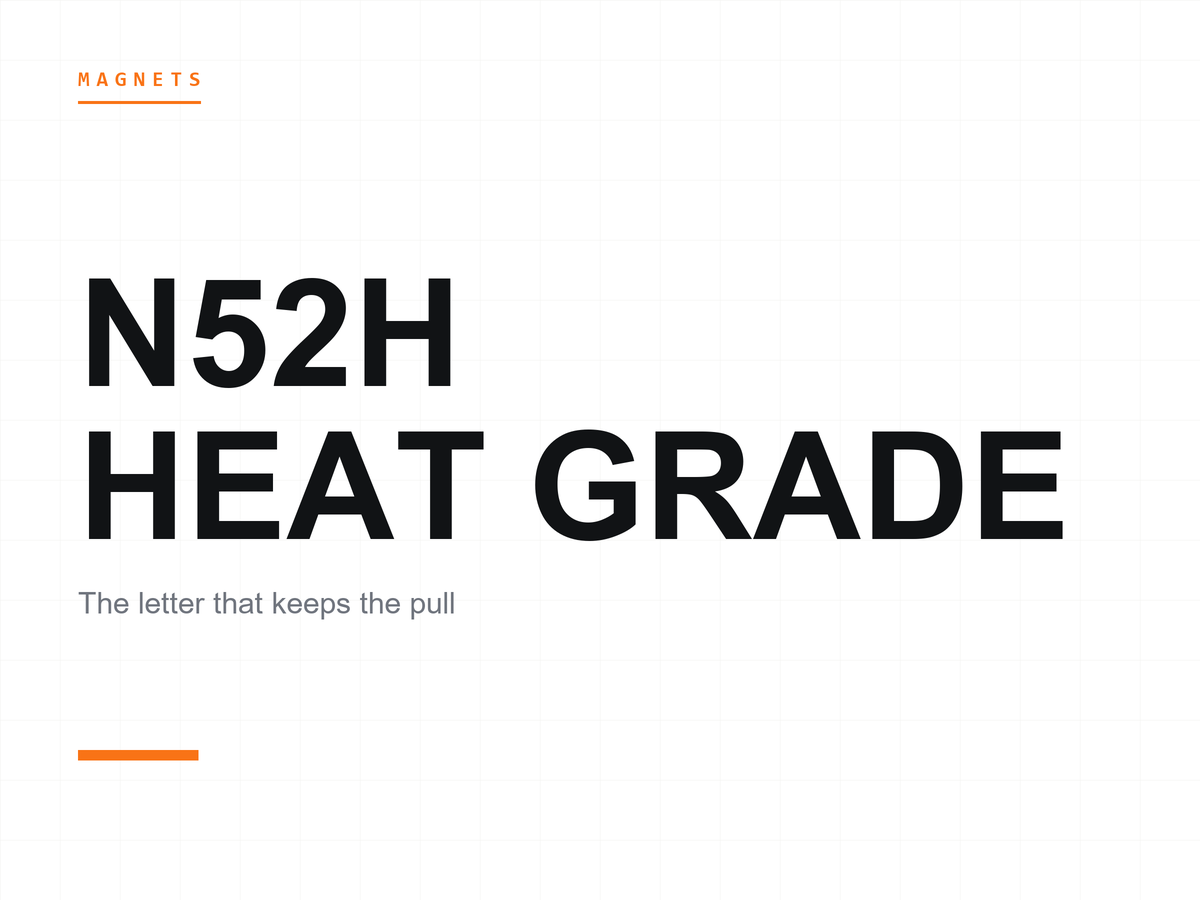
An N52H spec is two claims in one line. The N52 part marks magnetic strength; the H part marks how much heat the magnet tolerates before it fades. Buyers who sell iPhone cases for car mounts and wireless chargers ignore the second claim at their cost. iFunSmart treats the trailing letter as part of the spec, not decoration.
Last updated: October 3, 2026.
The Letter After the Grade
Neodymium magnets are sold under grade codes, and a code like N52H carries information in layers. The number part marks the strength class of the material. The letter that trails it marks a heat tolerance class. Put simply, the trailing letter is a heat rating, not a strength mark. The higher the letter, the more heat it tolerates.
Picture two dials on one label. The strength dial tells a buyer how firmly the ring holds a charger or a wallet in place. The heat dial tells the buyer how well that hold survives a warm car or a hot charging pad. A case brand that lists N52H is stating a magnet with the strength class of N52 and a heat class a step up the ladder. A brand that lists N52 with no letter is stating strength only; the heat behavior is left unstated.
Strength is what buyers feel in hand. Heat is the real test. The failure buyers forget to plan for is not a weak pull at the counter; it is a fading pull after a summer of dashboards and chargers.
Where the Heat Actually Comes From
Heat reaches a case magnet from directions a warehouse inspection will not show.
A windshield mount. A phone clipped under glass sits in direct sun for hours at a time, and the back of the case absorbs that warmth long after the driver leaves the car. A magnet that holds fine on a desk can lose grip on a dashboard by the end of a hot afternoon, and the case looks identical either way.
A wireless charger. Charging coils warm as they work, and that warmth passes through the back panel straight into the magnet ring. The tighter the fit and the heavier the charge, the warmer the contact point becomes. A magnet with a higher heat letter keeps more of its pull through those cycles, while a lower letter fades sooner.
Neither failure announces itself at receiving. Both announce themselves in the field, which is why the heat letter belongs in the spec before the order, not in the complaints after it.
What a Buyer Should Ask a Supplier
A buyer should settle the full grade in writing. Strong magnets is not a grade; N52 and N52H are. The spec sheet or the order confirmation should carry the complete code, letter included, so the claim can be checked against what actually ships.
Then pin down which letter fits the market. A buyer selling dashboard mounts into hot climates needs a higher heat letter than a buyer selling desk stands into mild ones. The right grade is not the strongest-sounding one; it is the one that matches the hottest moment the product will actually sit through. Have the supplier state which scenario they assume when they quote a grade, because the letter is only meaningful against a scenario.
We confirm the magnet grade for each batch in writing on the spec sheet and the order confirmation. We do not publish our own magnet heat test data, and the grade each order carries is the grade written on its documents.
Ask for the grade in writing.
The N52H Angle in Phone Cases
In a phone case, the magnet ring sits behind the back panel, next to the charging coil and next to the heat that coil generates. That position turns the letter grade from a material footnote into a practical spec. A ring with a higher heat letter holds its strength class through longer warm spells, which is why buyers building car-mount lines and fast-charging markets ask for it by name. We stock an N52H build for buyers who want the heat grade stated in the line itself.
The letter does not enlarge the hold. An N52H magnet of the same shape holds no tighter than an N52 magnet at room temperature; the difference arrives only when the heat does. A buyer chasing a firmer grip should look at magnet size, ring alignment, and the thickness of the back panel instead. A buyer chasing a hold that survives heat should look at the letter. Different fixes for different failures, and mixing them up leaves a case sold on a claim it cannot keep.
Common Questions From Buyers
What does the H actually change?
It changes how the magnet behaves under heat, and nothing else. The H marks the heat tolerance class of the material. It does not change the strength class, the ring size, or the pull a buyer feels in hand. A magnet can carry a high heat letter and still sit behind a back panel too thick for a firm hold, because hold also depends on the gap between magnet and phone.
Does an N52H magnet hold stronger than an N52?
Not at the start. Same shape, same size, same gap means the same pull at room temperature. The gap opens later: as the case absorbs heat, the higher-lettered magnet keeps more of its original pull while the other fades sooner. A recent U.S. private-label inquiry asked for a strong N52 or N52H magnetic ring and wireless charging compatibility in the same line. Buyers who ask that way are not chasing a bigger pull; they are chasing a pull that survives the charger.
How do I check the grade before I order?
Ask the supplier to write the complete code on the spec sheet, letter included, then hold the claim against the market scenario. A dashboard-heavy market needs the higher heat letter; a desk-charging market can live with the base grade. A supplier who cannot state the full grade is asking the buyer to decide on a promise instead of a spec. We carry an N52 build with metal buttons with the grade stated in the product name, which makes that check easy for buyers who like their specs visible.
What to Do Next
Decide which heat your market actually delivers, then make the letter grade part of the written spec rather than a spoken assurance. Review the lines you already carry and note which products state a full grade and which only say strong. For new lines, choose the letter before you choose the color: the color is visible on the shelf, and the letter is not, but the letter decides whether the product survives the shelf's climate. Our factory team in Guangzhou walks buyers through grade choices for any model list, with each grade confirmed in writing before production.
Send us your models and heat scenarios, and we will confirm the full magnet grade for each SKU in writing.
Apple and iPhone are trademarks of Apple Inc. iFunSmart is an independent manufacturer of phone cases and accessories and is not affiliated with, authorized, sponsored, or endorsed by Apple.