Business Solutions
One Media Pack, Two Channel Versions
Stores and online listings need different files. How to split one media pack into a store version and an online version without doubling the work.
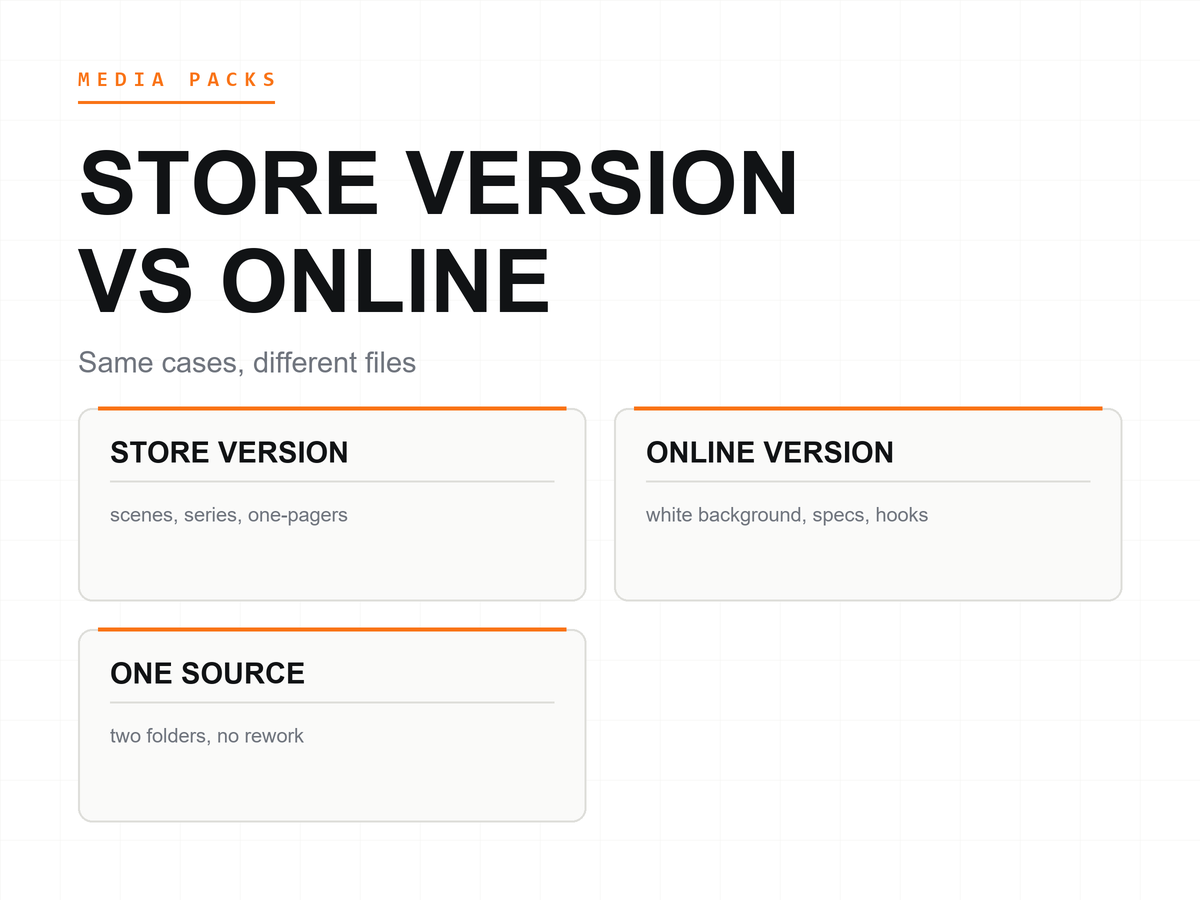
One folder worked when a buyer sold from a single counter. Wholesalers and distributors now often run a counter and a marketplace listing side by side, and the two demand different files. iFunSmart splits a media pack by channel, so the store version and the online version come from one source without the work doubling.
Last updated: November 12, 2026.
Why One Pack Stops Being Enough
A mixed pack made sense when one person did everything: unpacked the delivery, shelved it, listed it, answered questions. A distributor rarely works that way. Behind the counter, staff choose styles by eye. They want the scene shots, the shelf context, the sense of how a series sits together on a display. On the listing side, an operator needs the opposite discipline: a clean main image, the model and compatibility facts set out plainly, a selling line that survives without a person there to explain it. A channel version is the cut of one media pack that a single selling channel needs, built from the same source material and sent as its own folder.
Send both audiences one undivided folder and each side starts editing the other's material before any real work happens. The store trims the white-background shots into something printable. The listing side crops the scene images into something the venue will accept. That editing is the hidden cost of an unsplit pack: it slows the shelf and the listing at once, and it reopens exactly the version mix-ups a single folder was supposed to close.
What an unsplit pack carries, item by item, is its own subject. This piece is about the cut — where the versions part ways and how they stay single at the source.
What the Store Version Carries
The store version answers a staff question: how do we show this? Scene photographs lead, because a clerk who has seen a series arranged on a counter can rebuild the arrangement without being told. Next comes the style sheet grouped by series, so a restock order follows the shelf instead of wandering through loose singles. A printable one-page sheet rounds the folder out — the piece a shop pins beside the register — with a card-holder SKU for the store sheet standing next to the finishes that leave the counter soonest.
The test for a store version is blunt. Can a staff member pick up a case, say what it does in one breath, and hand it across the counter? A folder of white-background files fails that test quietly, somewhere between the delivery and the display.
What the Online Version Carries
The online version answers a different question: will a stranger understand this listing without anyone in the room? A white-background main image leads, followed by the detail shots that settle questions about buttons, hinges, and lens openings before a customer types them. Then come the plain facts, case by case: model names, compatibility written out in full, short selling lines an operator can lift into a listing without rewriting. A mainline design for the listing sheet belongs here, photographed so the listing side can use it as it arrives.
One boundary sits over this side of the split: platform rules differ by marketplace, and the seller confirms them. We supply files that photograph what we actually build. The rulebook for any particular venue stays with the operator who sells there.
What Happens When the Pack Is Not Split
The failure pattern repeats often enough to name. The store receives white-background files and treats them as flyers, because nothing on the page shows how the range sits together on a shelf. The listing side receives scene shots and stalls, because the background clutter is the sort a venue's image rules exclude. Then both sides write back with questions the pack was supposed to have answered, and somebody at the factory spends the week resending files that were already sent.
A split does not add work. It moves the sorting from the buyer's inbox to the packing step, where it happens once, at the source, instead of twice by two people who cannot see each other's edits.
How Two Versions Come From One Source
The work stays single because the source stays single. The photographs, the series groupings, the compatibility facts — each is produced once, and both cuts arrange the same material. What changes between versions is order and selection: which image leads the folder, which facts sit up front, which sheet goes to the printer. Cutting a version is arrangement, not a second production run.
Ours is a Guangzhou factory, and packs are assembled per request rather than pulled from a shelf. Name the channel when you write — counter and shop floor, listing operation, or both — and the folder leaves already divided, each cut labeled so nobody has to open it to know which is which. On imagery, our line stands as it stands everywhere: we provide free HD images only for the styles we have photographed. A style that has not been photographed is a question to send, not a file to expect. If you want to see the split before you use it, ask for both versions on a single model you already stock.
Common Questions From Buyers
Does splitting mean producing two packs?
No. One source set, two arrangements. Nothing gets photographed twice, and no fact gets written twice; both folders draw on the same body of material, and only the arrangement differs — what opens the folder, what a buyer meets on the first page, what a shop prints. A request for the split is a request for sorting, not for a second body of work.
Which version should a distributor ask for first?
That depends on where your stock meets customers first. A counter opening this month needs the store version on hand before the shelves are set. A seller whose storefront is a listing page needs the online cut first, because compatibility questions arrive there before anything else does. Most distributors hold both and use them in the order their channels open. Tell us both when you write, and neither version waits on the other.
Can the two versions drift apart over time?
They can, which is why both cuts carry the date and series naming of the source set they came from. When a style is revised or a series is added, the change lands in both folders at once, and the retired files come out the same day. If a folder in your records stops matching the pack you hold, ask for a re-cut instead of editing files on your side. An edited copy is a fork, and a fork is how versions quietly stop describing the same stock.
What to Do Next
Count what you sell through before you write: the counter or shop floor on one side, the listing operation on the other, and the models that appear in both. A channel note with a model list is enough to start. We mold cases in Guangzhou, assemble each pack from what you stock, and mark which styles have photographed images so both versions describe only what you can actually receive.
Tell us the channels you sell through, and we will cut your media pack into a store version and an online version before it leaves Guangzhou.
Apple, iPhone, Samsung, and Galaxy are trademarks of their respective owners. iFunSmart is an independent manufacturer of phone cases and accessories and is not affiliated with, authorized, sponsored, or endorsed by Apple or Samsung.