Oct 7, 2026Business Solutions
Packaging Proof Approval Gates Production
A packaging change after the run is the expensive kind. Why the proof is signed off before production starts, and what an approval actually locks.
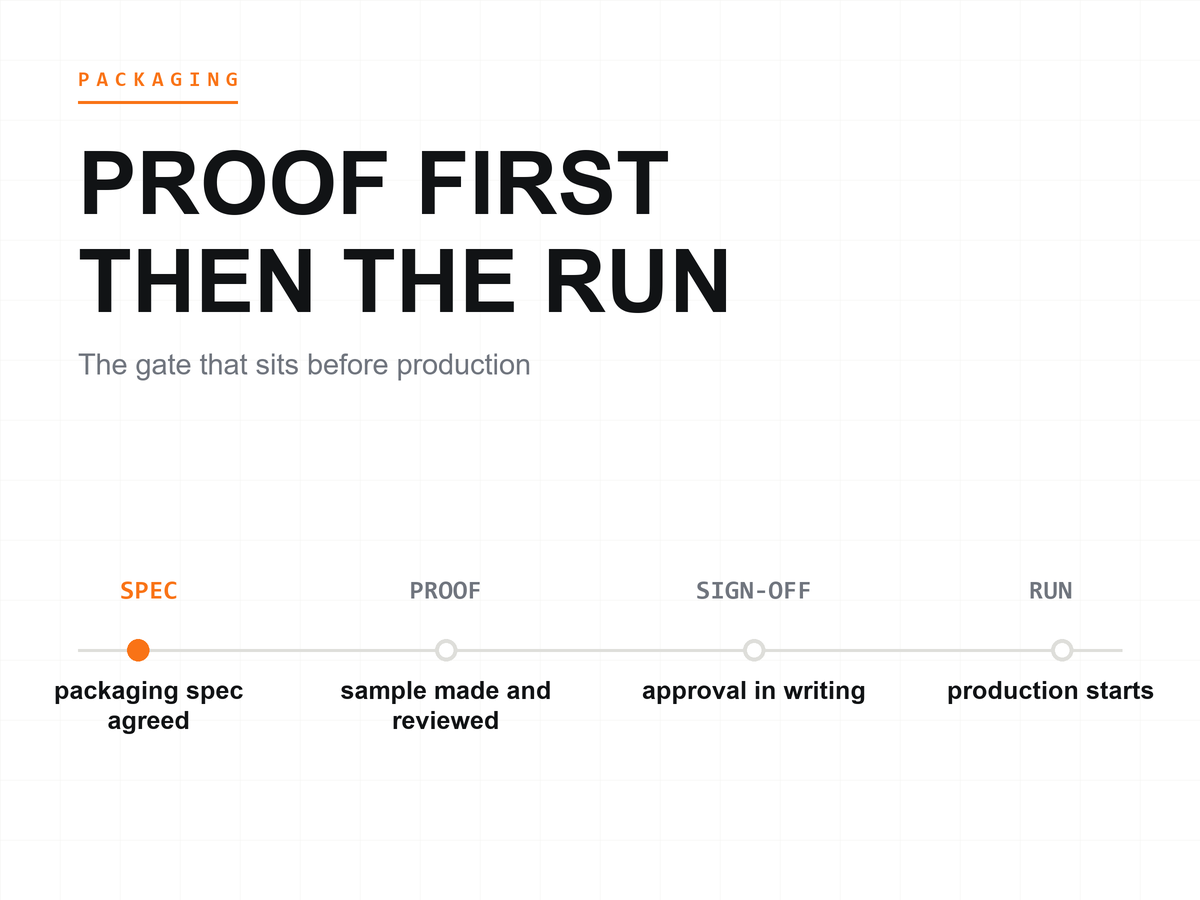
A packaging change after production has started is the expensive kind. At iFunSmart, the proof is approved in writing before the run begins, because that signature is what turns your artwork into fixed instructions for the press. Here is what the approval locks, and how to give feedback that settles it.
Last updated: October 7, 2026.
Why the Gate Sits Before the Run
A packaging proof is the physical or photographed sample of your retail packaging, approved in writing before mass production. That one sentence carries the logic of the whole gate. Before the run, a change to the artwork is a pre-press edit: the file is adjusted, a fresh proof comes back, and nothing has been printed yet. After the run, the same change is a reprint. Boxes already printed with the old wording get scrapped or shipped anyway, and either answer costs more than the edit would have. Before the run, a change is ink; after it, a change is inventory.
Our process confirms the proof before the run starts, which means the press only ever sees artwork that someone has signed. The gate also matches how buyers actually behave. Buyers typically refine a packaging layout in rounds — a font comes down a size, a model name moves to a quieter corner, a claim gets reworded — before they are willing to let it print. Treat that as normal and schedule for it at the sampling stage, where a round costs attention, rather than on the press floor, where a round costs the run.
What an Approval Actually Locks
An approval is not a mood of satisfaction. It is a set of fixed instructions, and every item on it can be pointed at later. When you sign a proof, you lock the typeface and the type size, the number of lines and where each line breaks, the position of every element on the panel, the color, and the material the packaging is made from.
Each of these reads differently in the file than on the printed box. Type that looked generous on a monitor can sit small under retail lighting. A color matched to your case on screen can drift once it lands on uncoated board instead of glossy stock. The proof exists so those surprises surface while they are still cheap to fix, and the approval exists so that whatever survived the proof is what gets printed.
Material belongs on the locked list as much as layout does. The same artwork prints differently on kraft board and on coated card, so the proof you sign should be produced on the material you ordered. If the material itself is still being decided, the proof is not ready to be signed.
How to Give Feedback That Converges
How many rounds a proof takes depends less on the factory than on how complete each round of comments is. Feedback converges when it arrives all at once. Read every new proof against the same questions — is the brand name spelled the way your trademark is registered, does every line fit its panel, does the color on the lid match the case that will sit inside — and send every correction in a single message. Scattered comments force a fresh proof each time they arrive; a complete round moves the layout to final in one pass.
When the layout settles, put the approval in writing. An email that names the proof, states that it is approved for production, and comes from the person who owns the decision is enough — both sides keep it, and the record is what the production floor follows. A verbal sign-off protects nobody. It does not protect you when a question surfaces mid-run, and it does not protect us when we need to show exactly what was approved.
Where the Proof Meets the Case
An approval is only as strong as its reference, and the reference is the case itself rather than the photograph on your screen. Put a printed proof next to the product before you sign. For a color SKU that lives on a retail shelf, a cherry-toned case for the iPhone 18 Pro, the lid color, the panel photo, and the finish inside the box all have to read as one product, because a shopper who sees a mismatch assumes the box is wrong and puts it back. Protection-led builds run the same check from the other direction: an armor retail build earns its panel copy only when the printed words describe what the construction actually does, and the proof is where you confirm the two agree.
Common Questions From Buyers
Does one approval cover every future order?
The signed proof covers the run it was approved for. On a repeat order we re-check the file against the locked proof, and if nothing has changed, printing proceeds from the approved version. If you want a new colorway, a new line of copy, or a new panel layout, that is a new proof and a new sign-off — the same gate doing its job. Keep your approved proof on file; it is what makes a reorder conversation short.
How many revision rounds should I expect?
There is no fixed count, and it depends on the buyer, on how much of the layout is new work, and on how complete the first round of comments turns out to be. A repeat order with a settled layout settles in fewer rounds than a first-time design. What shortens the process is not replying quickly but replying completely, and we would rather run another round of proofing than print artwork you have doubts about.
What should I check before I sign?
Read the words first: brand spelling, model names, and every claim on the panel, letter by letter. Fit comes next — whether each line breaks where it should, whether the type survives the distance a shelf browser stands at, whether anything crowds the barcode panel. The final check is the match between proof and product: the color on the lid against the case in your hand, and the material under your thumb against the one you ordered. Sign when those checks pass on the proof in front of you, not on the version you remember from yesterday.
What to Do Next
Send your packaging artwork at the sampling stage instead of after the case design is frozen. Expect rounds, give each round your complete comments, check every new proof against the physical case, and put the final approval in writing so both sides hold the same record. Do that, and the press runs once.
Ask iFunSmart to include packaging proofs in your next sampling round, and approve them in writing before the run is scheduled.
Apple and iPhone are trademarks of Apple Inc. iFunSmart is an independent manufacturer of phone cases and accessories and is not affiliated with, authorized, sponsored, or endorsed by Apple.