Oct 3, 2026Business Solutions
Sample Orders: Settle the Terms Before You Ship
A sample dispute usually starts with a word that meant different things. Four terms to settle in writing before samples move: fee, freight, offset, timing.
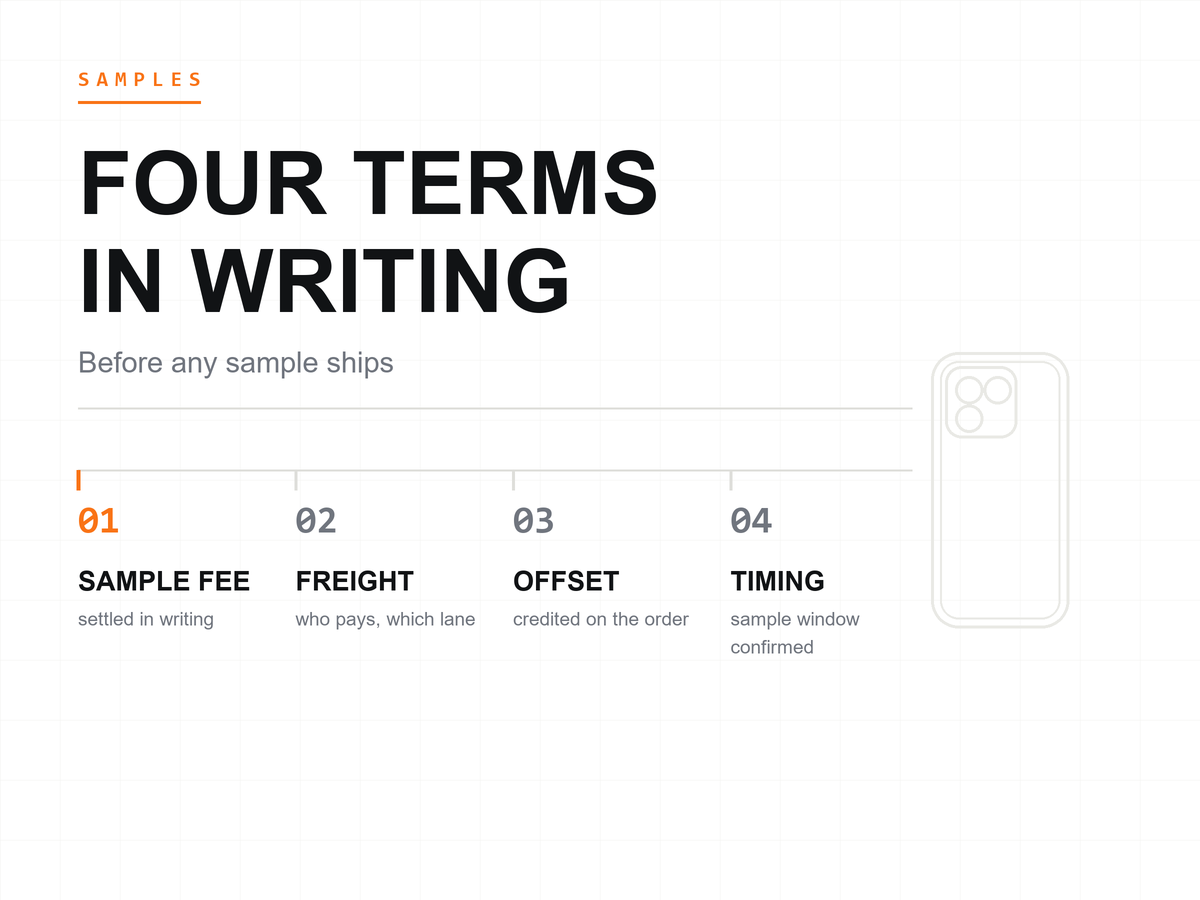
Most sample disputes start with one short word that meant different things to each side. Settle four terms in writing before samples move: the fee, the freight, the offset, and the timing. iFunSmart confirms sample terms on the order confirmation, so both sides work from one document instead of two memories.
Last updated: October 3, 2026.
The One Word That Starts Most Sample Disputes
The word is whether the sample is free or paid, and it splits into many meanings the moment two people use it. A buyer who hears that the sample costs nothing may picture no cost at all. A supplier may mean only the unit itself, with freight still moving on someone's account and a fee that returns only against a later order. Neither side lied. They settled different questions.
Sample terms are the written conditions attached to a sample order: whether a fee applies, who pays the freight, whether that fee offsets the bulk order later, and how the sample is produced and confirmed. Writing them down forces both sides to answer the same questions before money moves.
A sample is physical evidence, and no photo replaces it. For a phone case, holding the unit on the handset shows fit, material feel, button travel, and print quality in a way a catalog page cannot. That evidence is worth the small discipline of fixing its terms in advance.
We do not publish a one-size sample policy. The terms that govern your order depend on the styles, the tooling, and the destination, and they are the ones written on your order confirmation.
Term One: What the Sample Itself Costs
The first term is the fee. Whether a fee applies, when it is charged, and what happens to it later are questions a buyer should hear answered in one written block, not spread across a chat thread. Suppliers run different structures. A fee may be set off against the bulk order later, or it may be folded into the bulk price without a separate line. Neither structure is wrong. What matters is that the buyer reads the structure instead of guessing at it.
When you choose which styles to sample, pick builds that stress the factory's real work. A magnetic flagship case for the iPhone 18 Pro shows magnet placement and fit in one unit, and a hinge-protection case for the iPhone Duo shows whether hinge covers and cutouts are cut cleanly. Two demanding styles teach more than a box of similar shapes.
Tell us which models your customers ask for, and we can suggest a sample set that tests fit and finish together.
Term Two: Who Pays Freight
Freight is the term most often left to goodwill, and it is the one that arrives with an invoice attached. A buyer who agreed that the sample cost nothing may still see a freight bill, and that bill is where the dispute begins. Freight often costs more than the sample. On a small parcel it can exceed the value of the unit inside, which is why it deserves its own line in the terms rather than a handshake.
Settle two things about freight: who pays, and how the parcel moves. A courier to a desk and a consolidation into a batch heading the same direction are different arrangements with different costs and different arrivals. The written terms should name both. If the samples ride with a larger shipment, the terms should still say whose account covers the extra carton, because the fee and the freight are separate lines and separate promises.
Term Three: The Offset, in Writing
The offset is what happens to the sample fee once the bulk order is placed. Many suppliers return it in some form: a credit on the invoice, units added to production, or a refund after the order lands. The form varies. The buyer should see the mechanism in the same document that states the fee, because a verbal promise about an offset is worth little once the negotiation ends and there is no line to point to.
The test is simple. Read the fee line and the offset line together. If one of them is missing, the structure is incomplete, and the missing one is the term that will cost you later. Whether an offset applies to your order is a written matter, and we put it in the order confirmation rather than leaving it in chat messages.
Term Four: The Schedule and the Sign-Off
The last term is timing, and it has two parts: the sampling schedule and the method of approval. The schedule answers how long the sample round takes. We do not quote a standard window here, because the right schedule depends on the styles and the tooling they need; what matters is that the schedule is fixed in writing before the sample is made, so nobody discovers the length of the round halfway through it.
The sign-off answers what counts as approval. Some buyers approve by photo and video, and some insist on holding the physical unit before production starts. Both methods work when the method is agreed in advance. The rule is the same as everywhere else in this article: nothing moves to production until the sign-off exists in the form the terms name.
Common Questions From Buyers
Should a sample fee be refundable?
It depends on what was agreed, and the agreement counts only when it is written. A structure might refund the fee on the bulk order, credit it, or charge it for tooling work that cannot be reused for another customer. There is no universal rule, so a buyer should not assume one. Ask for the fee and the offset in the same written block, and read them together.
Which side pays freight on a sample?
Whoever the written terms name, and that can be either side or a split. What matters is that the answer is fixed before the parcel leaves, because freight disputes arrive with the invoice attached. A sample quoted without a unit fee but shipped on the buyer's account still carries a cost, and the terms should say so plainly.
Does every order need a sample?
Not every order. A stocked style that has sold before can move on a lighter step, but a new handset, a new mold, or a new finish deserves physical evidence before a bulk run, because the sample is the buyer's proof that the case seats on the device and feels right in the hand. Buyers keep asking for samples before large orders for exactly this reason. We treat a sample as evidence of fit and craft, and we confirm its terms in writing.
What to Do Next
Before you approve anything on the sample side, write down the four terms and send them over: fee, freight, offset, timing. If all four appear on the order confirmation, the samples that arrive are evidence you can act on. If one is missing, that is the one that will cost you later, and it is cheaper to close the gap before the parcel moves than after.
iFunSmart is a Guangzhou factory, founded in 2010, molding cases with 1:1 precision and in-house CNC. Sample terms for your order are confirmed in writing on the order confirmation, so the sampling round and the bulk order that follows run on the same document.
Send us the sample terms you want settled, and we will confirm them in writing on the order confirmation before samples move.
Apple and iPhone are trademarks of Apple Inc. iFunSmart is an independent manufacturer of phone cases and accessories and is not affiliated with, authorized, sponsored, or endorsed by Apple.